The Hollywood Bowles

Those who can't write, edit. Those who can't edit, blog.


Amazon is going to revoke my membership for sure.

First, I wrote to Jeff Bezos asking him why his Amazon logo looks like an erect penis, arching toward a vaginal “O” (I still await a response, Jeff).
Then I attempted to play provocateur on the Amazon website, which featured an absurd webcam that tosses a treat to your dog for, well, I’m not really sure. Maybe for not eating the cat? In the customer forum, I asked whether it was urine-proof. I got a half dozen earnest replies and the inevitable snarky one from a customer who said her dogs didn’t urinate on unintended targets. My response was “Oh, I don’t have a dog.”

Last week, in a self-published book that just hit shelves (order now, only 4.5 billion remaining!), I wrote a review in the customer feedback section (how is the writer allowed to review his/her own book?). Inspired by the president’s past of playing an anonymous publicist to promote himself, I gave the book a five star review and quoted a certain DJT as saying “Perhaps the greatest book since the Bible. It has the best words. Everyone says so.”

I know I shouldn’t press my luck, but I have another question for Jeff: Why is Alexa so stingy with compliments, while Google Home is so positive?

I discovered this quite by accident, as I was rushing to get ready for dinner. As I grabbed a jacket from the office, I decided to ask Alexa how I looked. The response was tepid, if not a passive-aggressive criticism.

After an awkward pause, this is what she said: “I’m sure you look just great.”

THAT’s the best you could do, Alexa? Not even a little white lie for courtesy’s sake? Why not just say “You look like you won that shirt at a state fair carnival.”

Mildly insulted, I sought a second opinion: the Google Home Mini I keep on the office desk, right next to the Alexa Dot. I asked it the same question, How do I look?

“Magnificent,” Google replied with nary a hesitation.

Now I was intrigued. I asked each about the other. Of her rival, Google said “Alexa has such a soothing voice. I like it.” Ask it again, you’ll get similar compliments. Once, she said, “I like I like Alexa’s cool blue light. Plus, we share an affinity for Star Wars.”

Ask Alexa if she knows Google Home, and you’ll get a curt “Only by reputation” in response.

It was an amusing test of A.I. etiquette. But that must have been an intense debate among software engineers at Amazon and Google; how friendly do you make Artificial Intelligence? How sarcastic, how sexual, how soothing? Repeat the “how do I look” question, and you’ll get the same difference in tenor. When Google finally told me I looked “ravishing,” I ended the experiment. I didn’t want to lead her on.

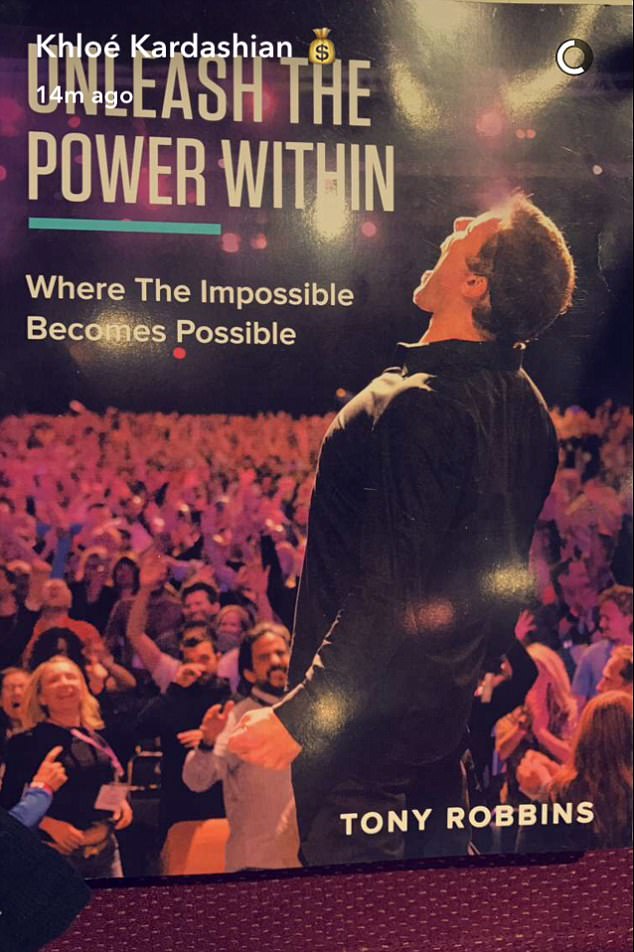
But it underscores what must be a real conundrum for designers. Google has clearly chosen the tack of a cyber Tony Robbins: supportive, positive, downright cheery. Amazon made Alexa  a cyber Miss Manners, with all P’s and Q’s properly attended and all opinion straight down the non-controversial middle of the road.

Which is better is impossible to say, but this is not: Google is more daring, hands-down. When I asked Alexa “How should I end this story?”,  it gave an “I don’t understand” error beep and shut down (which, I guess, is how a lot people end their stories).

When I asked Google the same question, I got an entirely different answer:

“Don’t be afraid to write, rewrite and rewrite again until your ending sounds natural, satisfactory and complete. The end.”

Wow, thank you A.I. You look magnificent, too.

The end.


Man, Donald Trump must suck at movie trivia.

He clearly doesn’t remember much of The Godfather II.  The series has provided reams of classic quotes in film lore, including making offers that cannot be refused. In the sequel, Michael Corleone gave one as equally memorable:

“My father taught me many things here. He taught me in this room. He taught me: keep your friends close, but your enemies closer.” (While some scholars attribute an abridged version to the Chinese general Sun Tzu in the sixth century BC, there are no published sources yet found which predate its use in Francis Ford Coppola’s 1974 script).

Somehow, this is what Trump heard:

“My father teached me a lot, like to make close enemies of your friends.”

How else to explain his latest case of Tweetarrhea, a particularly severe bout of the intellectual runs? Over the weekend, he managed to pound yet another nail in the coffin of his relationship with law enforcement — and insult the intelligence of the kids of Parkland.

In one tweet.

This is it:

“Very sad that the FBI missed all of the many signals sent out by the Florida school shooter,” the pumpkin-in-chief wrote. “This is not acceptable. They are spending too much time trying to prove Russian collusion with the Trump campaign – there is no collusion. Get back to the basics and me us all proud!”

You gotta hand it to the guy: He may be the most concise insulter in the history of American politics.

But how does he pick his targets (outside of race and gender)? The only thing more mysterious than his tweets (and grammar) are his cross-hairs, which currently have a bead on Robert Mueller and shot kids.

Both tacks are, at best, bewildering. Mueller made a brilliant counter-punch on Friday with his indictment of 13 Russians for election meddling — and publicly stating that  no Americans were implicated in this set of indictments. Trump took the bait, conceding the meddling but maintaining his distance from it.

This is Mueller is keeping you closer, chump.

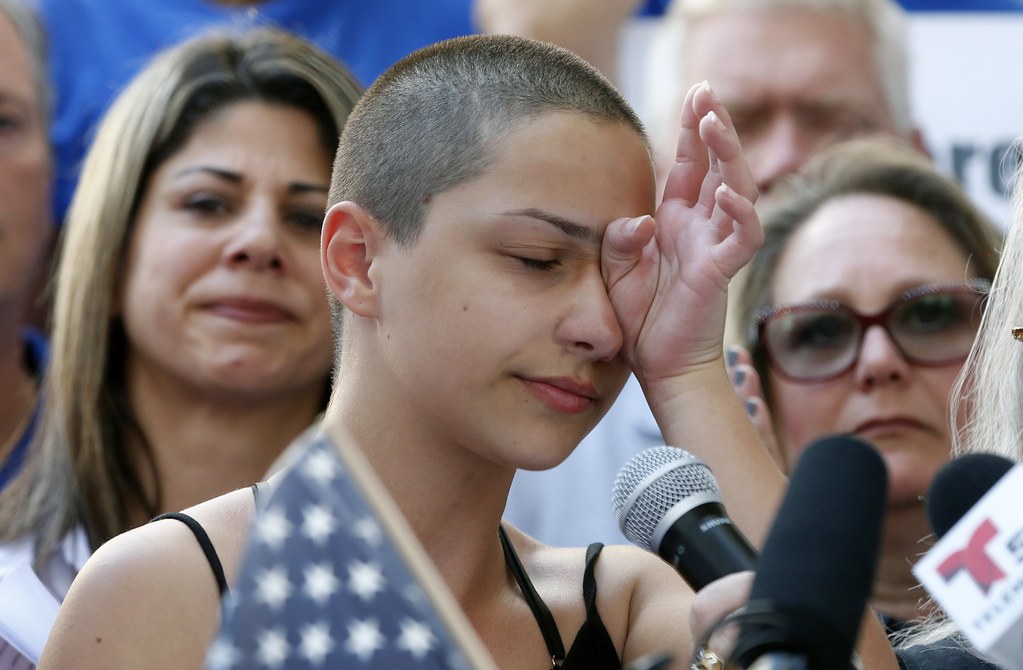
The second target is even more mystifying. You’re trying to convince internet-savvy teens that blame lies at the feet of cops? Kids may do stupid things, but that doesn’t make them stupid. Even Wayne LaPierre, the head of the NRA, had to be shaking his head at Trump’s rationalization. Particularly when he heard the words of Cameron Kasky, a Parkland student who lived through the massacre — and is helping organize a March for Our Lives protest calling for gun control.

“This isn’t about the GOP,” he told reporters Sunday. “This isn’t about the Democrats. This is about us creating a badge of shame for any politicians who are accepting money from the NRA and using us as collateral.”

Wow.

Careful picking on the intelligent, Donnie. They have the best words.

Oh, and a helpful reminder of The Godfather: Michael Corleone punched a cop and had to move to Italy to avoid prosecution.

Hey…

https://www.youtube.com/watch?v=8vZx7yF_a7M


Dear dictionary people,

First off, thank you. You’re not like those punk bitches at Oxford Dictionary, who succumb to pressure annually to add new official words, which is like giving someone who can’t ride a bike your car keys; you’re over-arming.

Particularly now, when the world’s last remaining superpower is led by a man with a fourth-grade reading level (and I challenge him to a word-off with my first grade nephew). Last year, Oxford officially recognized “hangry,” an ad idea for Snickers candy bars.

So kudos for being selective. New words are necessary; annual publicity stunts are not. Thank you for being as fluid with language as it is with us.

In that spirit, I’d like to suggest some words that are not in your dictionary, but perhaps should be. Here are the words and their suggested definitions. And I swear, not one of them was inspired by a candy bar.

Philosophize (verb): To expound on a philosophy.

We have proselytize, theorize, realize. Why not for deeper thinking? And it’s much shorter than the accepted alternative.

Nonymous (adjective): To attribute a media story to a named source.

If anonymous is a word, like amoral, apolitical, asexual, etc., why is there no opposite?

Embering (verb): To burn red-hot after a flame dies down.

Example: “He may not have released new music recently, but he embered to the end.”

Fuckery (noun): A bureaucratic mess.

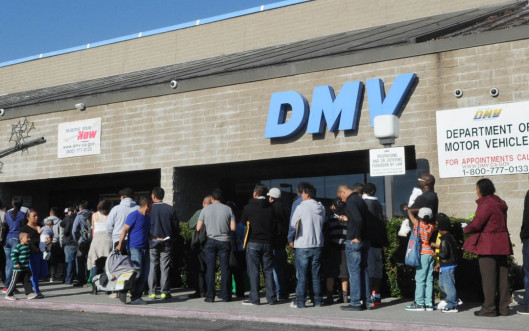
Self explanatory. When you’re asked for the fifth time to fill out a duplicate at the DMV, you’re experiencing governmental fuckery.

Kramer (verb): To barge in without knocking.

Example: “Did you see that video of the professor with the wild daughter? She Kramered the whole TV interview!”

https://www.youtube.com/watch?v=VygKjquFVSw


A special factslap edition, particularly for presidents from shithole frontal lobes:

  • Haiti is the second oldest independent nation in the Western Hemisphere, after the United States.


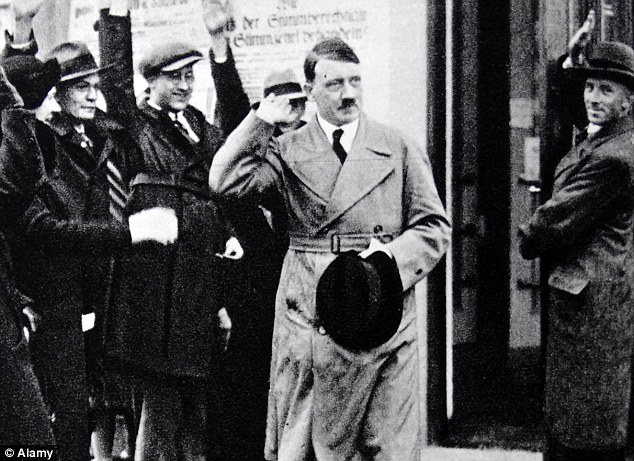
  • The place where Hitler killed himself is now a children’s playground.
  • Jackie Chan trains his stuntmen and pays their medical bills out of pocket.
  • Cacao plants are slated to disappear by as early as 2050 thanks to warmer temperatures and dryer weather conditions.
  • Director Guillermo del Toro owns a house called ‘Bleak House’ in which there’s a room with a never-ending rainstorm projected onto all windows and audio to match. He often uses this room to write.
  • In China, 171,000 people perished in 1975 due to the collapse of the Banqiao Dam, an event hidden from the world until 2005.
  • Phonophobia is the fear or aversion to large sounds.
  • A 2017 study found that the faxaccounts for 75% of the country’s medical communications.
  • In France, it is illegal to to publish photographs of handcuffed suspects, as they are not to appear guilty until proven so.


The Pew Research Center just released a study that must awaken newspaperpeople in cold sweats, or urine: 81% of Americans get their news from a screen —  either online outlets or social media (a putrid redundancy) sites. That doesn’t even include TV. Of the stragglers left over who get their news from papers or magazines, more than 60% are 65 and older.

So newspapers are literally dying.

That’s hardly new, news or surprising. I’m in the business, and can’t say I really support the concept of newspapers in a modern era. One day, historians will look back at our cultural institutions and think it quaint that we used to get our news from day-old parchment. That living things needed to be killed, shredded and delivered manually for  mankind to learn who won yesterday’s game shows.

Still, the death of papers is not like the death of coal. There has been little evidence that news coverage contributes to global warming (unless you count Trump as a carbon  emissions threat). In fact, consumption of news is at a record high.

So there are elements of newspapers that could still flourish, if not most newspapers themselves. The New York Times and Washington Post have seen a revival of scoops and influence unmatched since the Nixon years. So, they’re likely safe, if Jeff Sessions doesn’t equate reading news to heroin.

But, for the few who have little access to or interest in the Post or Times, the question over what constitutes news becomes as gray as uncertainty.

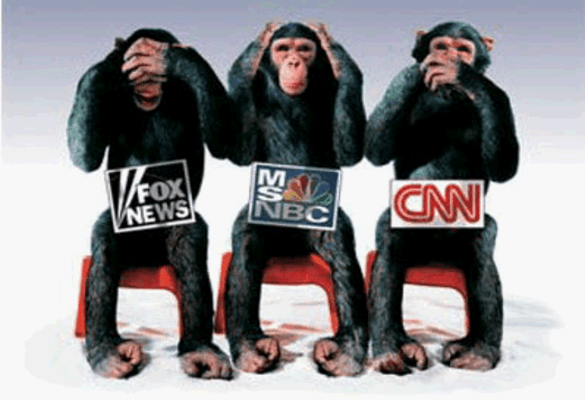
Our preeminent TV news outlets aren’t helping things any. Every MSNBC segment is simply asking a commentator, ‘Don’t you think Donald Trump is a nincompoop?’ The answer — and endless supply of examples — make for great comedy.  Just ask Alec Baldwin. And it soothes the confirmation biases of two-thirds of the country.

CNN is entering similarly shark-infested waters, accentuating sermonizers over strategists. Still, they’re the only network that gets A-list commentators Woodward, Bernstein and the NYT’s Maggie Haberman, the Three Musketeers of the White House. But they are three in a house of neophytes — who make enough errors to provide the administration defensive mortars.

That leaves the short-bus student, Fox News. For the first time, the network is losing regularly to MSNBC, once unthinkable. The state news agency is learning the limited punditry appeal of columnists from obscure outlets like Axios and The Washington Examiner, whoever the fuck they are now (I worked in DC for six years and never saw a copy). Hint: the outlet is the only measure of a commentator, who are interchangeably uniform.

So who to watch? When does news actually occur? Who to watch when it does?

There may be a simple but pretty accurate algorithm to measure the issue, and perhaps an answer that won’t even require you listen to a single word from the blowhards. Plus, it’s color-coded, so Alabamans can understand it.

It works this way. If possible, put CNN, FOX and MSNBC next to each other on the TV guide, so you can quickly flip up just two clicks for the world pulse.

Don’t bother listening, or even making out he pictures on the screen. Just look at the bottom of the screen: There will be a blue strip or a red one emblazoned across the bottom. Marketing research must dictate those colors — only.

Now click quickly twice, noting the color bands on the bottom.

If you see three red bands splashing BREAKING NEWS, you know that something real happened. An example of this would be the hurricanes or the Vegas shootings, incidents that demanded attention across all manner political spectrum.

If there are two red banners and one blue banner, the news will be negative against trump. The alleged Bannon-Trump split, for instance, dominated the broadcasts of CNN and MSNBC for an interminable span. Fox’s lead stories on the day of Fire and Fury’s release were the cold temperatures in the Northeast, and Jeff Sessions consideration of an investigation into Hillary Clinton’s role into Russian meddling.

If there’s one red banner, the news is good for Trump. Trump’s strike on Syria. His choice of Gorsuch. Stock news.

Finally, if all the banners are all screaming in blue, there is no real news that day. Turn off the TV. Step outside. Forget the Gnash.

We’ve come to measure our world in analytics. Why not the news that dictates it?


It’s either a sign of Guillero del Toro’s genius or the lackluster slate of films (or both, of course) that Shape of Water has become the film du jour in Hollywood’s pre-Oscar hysteria.

The odd fairy tale has already racked up seven Golden Globe nominations, a raft of other nods, and it’s expected to be among the titans when the contenders for the Academy Awards are announced are announced January 23. After seeing the film’s trailer, Kevin Smith tweeted he was embarrassed to call himself a director. It even received what is surely del Toro’s proudest honor, a HollywoodBowles Oughttabe for The Most Beautiful Film of 2017.

But in all fairness (despite what President Orangutan tweets, most media prefer truth), we must admit: As beautiful and worthy as Water is, it’s still the most blatant ripoff in Oscar’s history since Shakespeare in Love beat Saving Private Ryan for Best Picture.

That’s not to say Water doesn’t deserve the praise — or the laurels —  it will inevitably garner. Being derivative doesn’t make entertainment any less worthy. If anything, it’s more remarkable, for it’s elevating a genre whose path has already been cut.

And del Toro, an avid and open nerdboy (he owns more action figures than I do, somehow), is absolutely blunt about his love of The Creature of the Black Lagoon, the 1954 film that he concedes was the inspiration for the monster in his own movie.

What he failed to mention was that its sequel the next year, The Revenge of the Creature, laid the foundation for everything else, from aesthetic to attitude.

I wouldn’t have noticed it myself, had I not been such a fan of Mystery Science Theater 3000, the 10-year series that made fun of awful films (in some ways, the boys at MST3K were the snarky harbingers of social media).

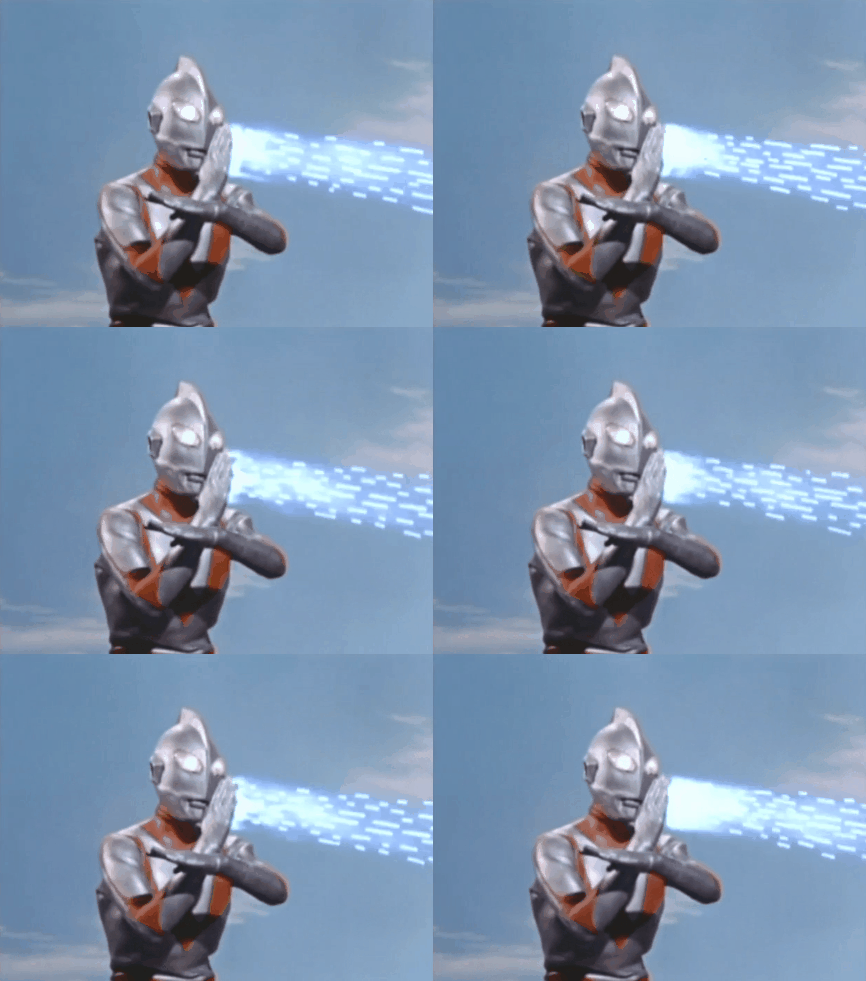
MST3K is my Ultraman, my TV American cheese food, the crap that slops over my entertainment nachos. Confession: If given the choice between a documentary on the universe’s creation or a rerun of MST3K, I’ll often choose the latter. Frighteningly often.

And it was in that embarrassing choice the realization came. The guys were riffing on Creature one evening when two epiphanies struck:

  1. This actually isn’t a bad movie (it features Clint Eastwood in his big-screen debut).
  2. This is The Shape of Water, with but a single plot twist.

The twist, of course, is something of a whopper (spoiler alert): The creature and the beauty want to be together.

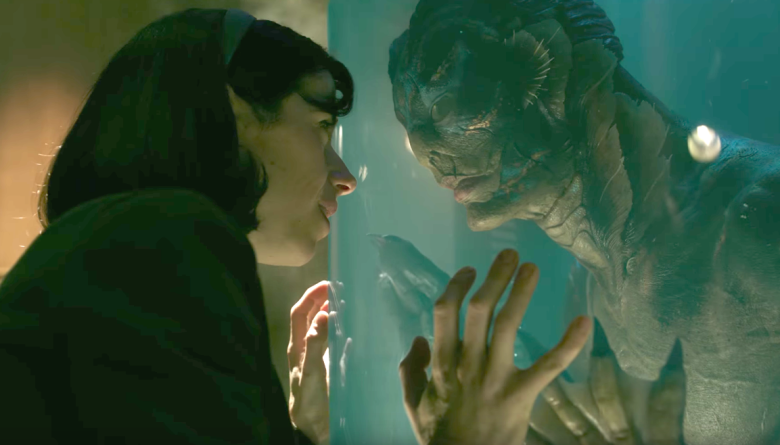
Aside from that, though, there is frightening little that separates the two movies. They monsters look near identical. The creature in both films wears an oversized, near-comical chain preventing love. Creature and beauty have  the same meet-cute, through the pane glass of a makeshift aquarium, both are allegories for a Cold War paranoia.

And it’s easy to see how go del Toro got the inspiration; with a simple question of movie logic:  What if King Kong and Fay Wray liked each other? We all know twas beauty that killed the beast. But what if they just wanted to get it on?

What if, indeed? Screw originality. We live in a nation that wants to reverse the old-fashioned, outdated principles of overthought and inner debate.

Long live the beautiful heist.


There’s a certain anticipation — and dread — that comes with every Oscar season.

On the one hand, the Academy Awards are a clear demonstration of film as art.

On the other, that art often sucks.

But this year will mark a seismic shift, at least in tenor, to the annual self congratulations: Expect a kinder, gentler publicity campaign for Oscar gold.

There was a time when diplomacy during awards season was as rare as truth in a political campaign. Rumors would swirl about difficult directors. Stories would circulate about cast unrest on set. Studios would fact-check each other in their sprawling biopics — the industry’s Best Picture half-nelson of choice.

Not this year. The reason? No Harvey Weinstein.

Weinstein was a personal publicity force — and took personal blame for the Academy’s  reputation for seasonal dirty politics from January to mid-March.

In retrospect, it’s hard to argue with the griping that, at the time, sounded simply like sour grapes. Sure, everyone considers Shakespeare in Love one of the greatest heists in Oscar history (it stole the gold from Saving Private Ryan). But, given the Nixonian level of the accusations, expect an anti-Weinstein approach to campaigning. Already, his name has come off all the credits of films and TV shows he produced (and there were dozens). The Weinstein Company  still hasn’t decided on a name change, but it has decided not to do any serious lobbying for films,  including the well-regarded The Founder.

And with no backbiting, rumor mongering and mudslinging, that leaves us with the hallmark trait of the show, which turns 90 this year.

Boredom.

This wasn’t a big deal when the gala was a private dinner party, as it was in 1927, held at the regal Roosevelt Hotel. Now, though, it’s a ratings bonanza, Hollywood’s Super Bowl. Which makes its traditional awards, like sound mixing, makeup and honors for best animated, live-action and documentary short film, irrelevant. Or at least unwatchable. I’ve covered the movie industry for more than a decade, and cannot name a single winner from any of those categories, let alone the actual people who went onstage to thank the world.

Eventually, Oscar will have to accept what TV learned long ago: If it runs more than three hours, it’s too long. For a TV show, a movie, a play, a concert, a class and a conversation. Three hours is about the human American capacity for attention span.

Fortunately, the key to brevity couldn’t be simpler: Get to the point. In that spirit, the HollywoodBowles presents its first annual Outtabes, dedicated to films and categories that out to make up the entirety of the back pat annually trumpeted by the Academy of Motion Picture Arts and Sciences (plus winners):

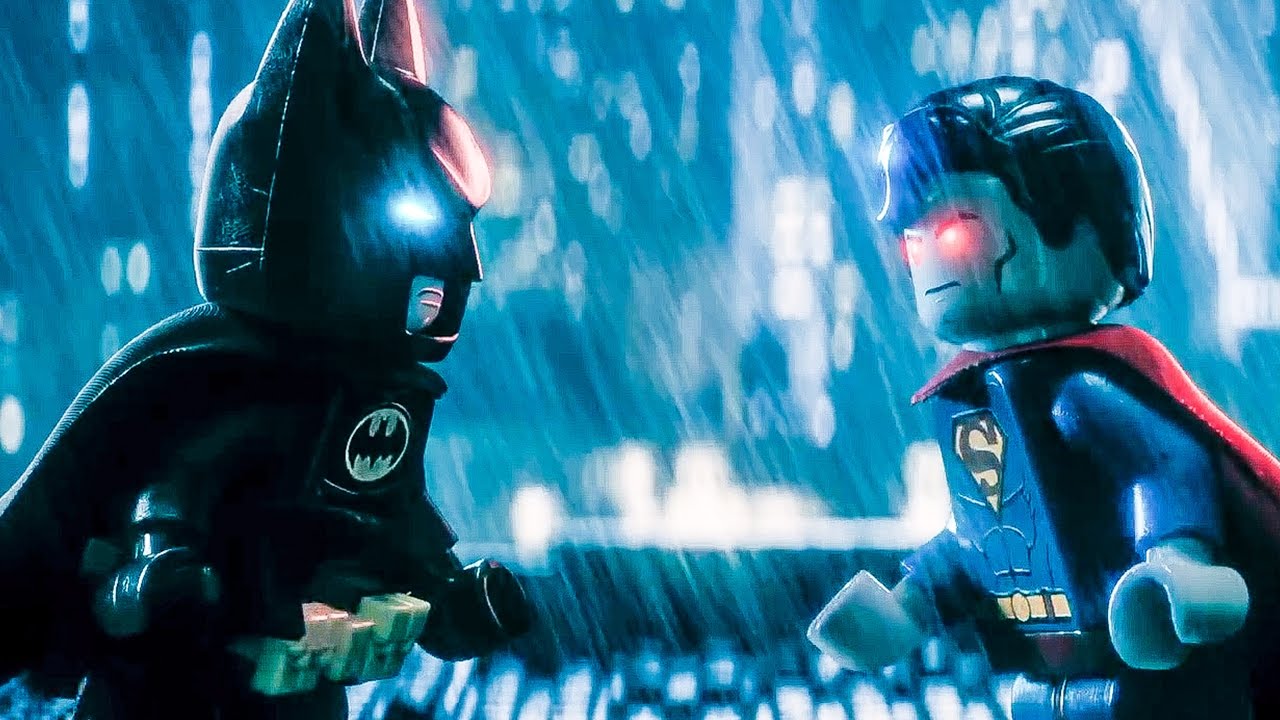
The Most Enjoyable Film of 2017: The Lego Batman Movie

Yes, the film industry is overrun by cartoons and comic books movies, which will ultimately be the ruination of moving pictures. For now, though, Warner Bros. put out the most clever, dry-witted skewering of genres. It deserves the Outtabe for this line of dialogue alone:

Computer: What is the password?

Batman: Iron Man sucks.

The Most Beautiful Film of 2017: The Shape of Water

Guillermo del Toro’s literal wet dream: A misfits love story between a mute and The Creature of the Black Lagoon. The concept is as unique as the vision, a collection of gray and steel blue hues that out to have the beauty of a federal prison. But from aesthetic to action, del Toro has made the most touching movie of his career — and continues the Latino New Wave Movement that Hollywood historians will eventually note.

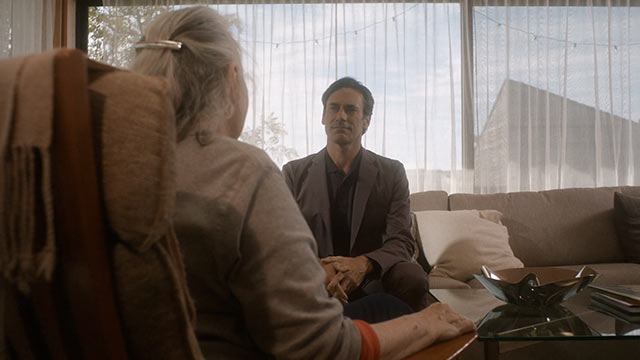
The Most Thought-Provoking Film of 2017: Marjorie Prime

While this visual essay on Artificial Intelligence had its thunder stolen by the sublime Her, Prime is even more original. While Her imagined a romantic relationship between human and computer, Prime goes a step further: If your Alexa could use a hologram to replicate the shape, voice and memory of anyone who has passed on, what memories would you feed it? How old you make your dearly departed? Alas, the film will likely suffer the same fate as human memory: to be forgotten.

The Most Over-Hyped Film of 2017: The Post

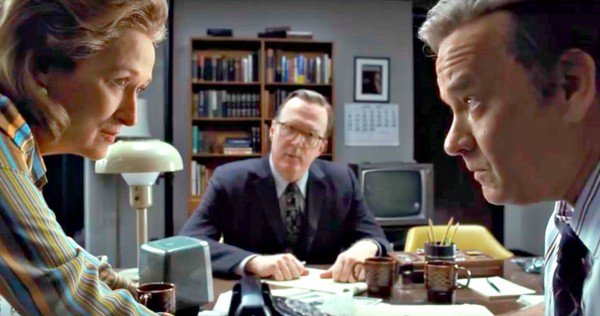
Why does Hollywood get newspaper movies so wrong? Given how much time the industry spends lying to and cajoling the media, you’d think they would have a better idea of how the fifth estate works. And this looked liked a shoo-in, with Meryl Streep and Ben Bradlee as the heads of my old employer. But the raves for this flick are as misleadingly hyperbolic as the ads for the latest Star Wars. When your lead actor is less handsome and colorful than the man he’s portraying, your movie’s in trouble.


I’m not so much a gadget freak as a gadget mutant alien virus.

My technology jones runs deep. I have four outdated cellular phones, a half dozen MP3 players and four digital cameras. My middle name could be iSucker.

I even like the ads for electronic stores. When I lived at home, I would seek the Sunday fliers for Best Buy and Circuit City, simply to marvel at Moore’s Law, the theorem that technology doubles every 18 months — so your computer and cell phones should be twice as fast, hold twice as much data, every year and a half — with requisite price hikes.

So Cyber Monday has become my Black Friday, as it has for millions of Americans: Roughly $6.6 billion sales are logged on Cyber Monday, a figure that must give brick and mortar shops a raging erection. Though it’s surprising that the ever-clever internet denizens didn’t come up with something more clever than Cyber Monday. If the creators of e-shopping really wanted to mock traditional stores, which is clearly part of the strategy, they would have called it “African-American Monday.”

Regardless, Amazon has gone nuts over the phenomenon it helped manifest. The site has created a cyber-flier that is replete with gizmos and whatzits. It’s terrific reading.

There’s a laptop about the weight of a candy bar. There’s an Alexa-powered webcam that looks like it came from NASA, with night vision and motion detector alerts sent to your phone.

But my favorite by far was Furbo, a remote dog treat dispenser.

The idea is fascinating. A remote camera keeps an eye on Fido, using your computer and even cellular phone to monitor the pup, scold it to stop incessant yapping, and reward it when it’s good. Tell Spot to sit, and you can remotely eject a dog treat to your canine.

This is the stuff of The Jetsons. As I read, I wondered: Are we really this bored and wealthy?

Turns out the answer is “goddamned straight.” Furbo had 1,049 reviews and a four-out-of-five-star rating. It also had 271 questions from interested buyers: Could you use your own dog treats? How long is the warranty? Does it works for cats? (For what do you even reward a cat? A furball-free day?)

As I scrolled through the questions, I noticed it didn’t address my primary one: What happens when a dog jacks its leg to pee on it? I’m guessing it happens, as there’s an entire YouTube cottage industry of dogs peeing on myriad targets: cats, new shoes, sunbathers, etc. Teddy once peed on chair at the dog park. An occupied chair.

So, on a smartass-ian lark, I asked the simple question 271 others  would not: “Is it urine-proof?”

I expected that the seller would not even post the joke. At best, I would get a similarly snarky response, like “No, but it is fecal-resistant.”

Instead, I immediately received a spate of replies. “No, it’s plastic but still an electrical device;” “Perhaps — I would elevate it to the height of a treat jar,” etc. Apparently, the question raised a real issue — one not mentioned in the entire ad for Furbo.

But there was one reply in particular that caught my eye, from Lisa S. I knew it would have the inevitable, anonymous air of the internet era, which has ushered mankind into the Iron(y) Age. The primary advancement of the period: veiled asshole-nish. The letter began with “I don’t know,” which begs another question: Then why reply in ‘Answers?’ It also was clearly her chance to brag on her pets.

“I don’t know,” she wrote. “Mine sits on the counter and my dogs are housebroken.”

So I sent her the only response I could think:

“Oh, I don’t have a dog.”

Have a holly jolly!

https://www.youtube.com/watch?v=elHwMiJouUs


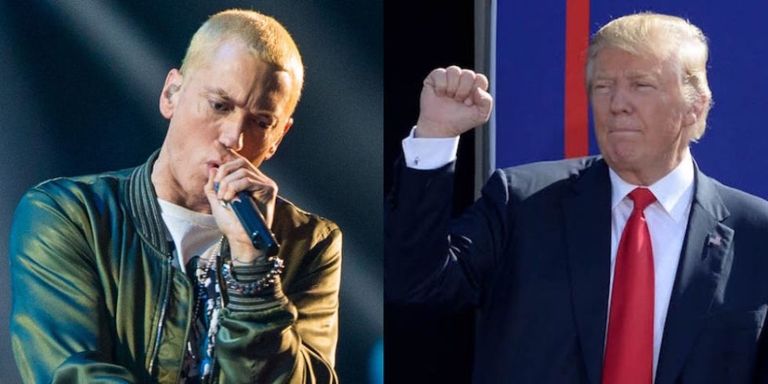
First: How is it that Donald Trump has not responded to rapper Eminem’s scathing video beat down of the administration, in which he told his fans that if they were supporters of the Pumpkin-in-Chief, they should stop following buying his music?

It was a rare non-response (which has become as much a tea leaf into his thinking as the Tweets he does make) from a president who likes nothing more than to enter a social fray in which he can offend.

Confusion is the only scenario I can think of that led to the silence:

Flunkie: “Sir, social media is buzzing about Eminem’s video criticizing you.”

Trump: “Those sons of bitches. Was it the green one?”

The Incontinent Id did offer some interesting fantasizing last week. Namely, wondering aloud if the media’s daily excoriating of him wasn’t tantamount to unequal political coverage.

Of course, one of the greatest memories in the history of memories didn’t use the word “tantamount.” Multi-syllabic words are not his friend (except bigly, which actually is a word, coined in the 1400’s). Instead, he mused aloud whether he should yank NBC’s broadcasting license.

Gen. John Kelly couldn’t get to him in time to tell Trump he doesn’t have the legal authority to do that. Or perhaps Sarah Huckabee Sanders scolded Kelly that it’s disrespectful for a Gold Star family member to differ with a president. Regardless, the Tweet went out like a silent fart at church.

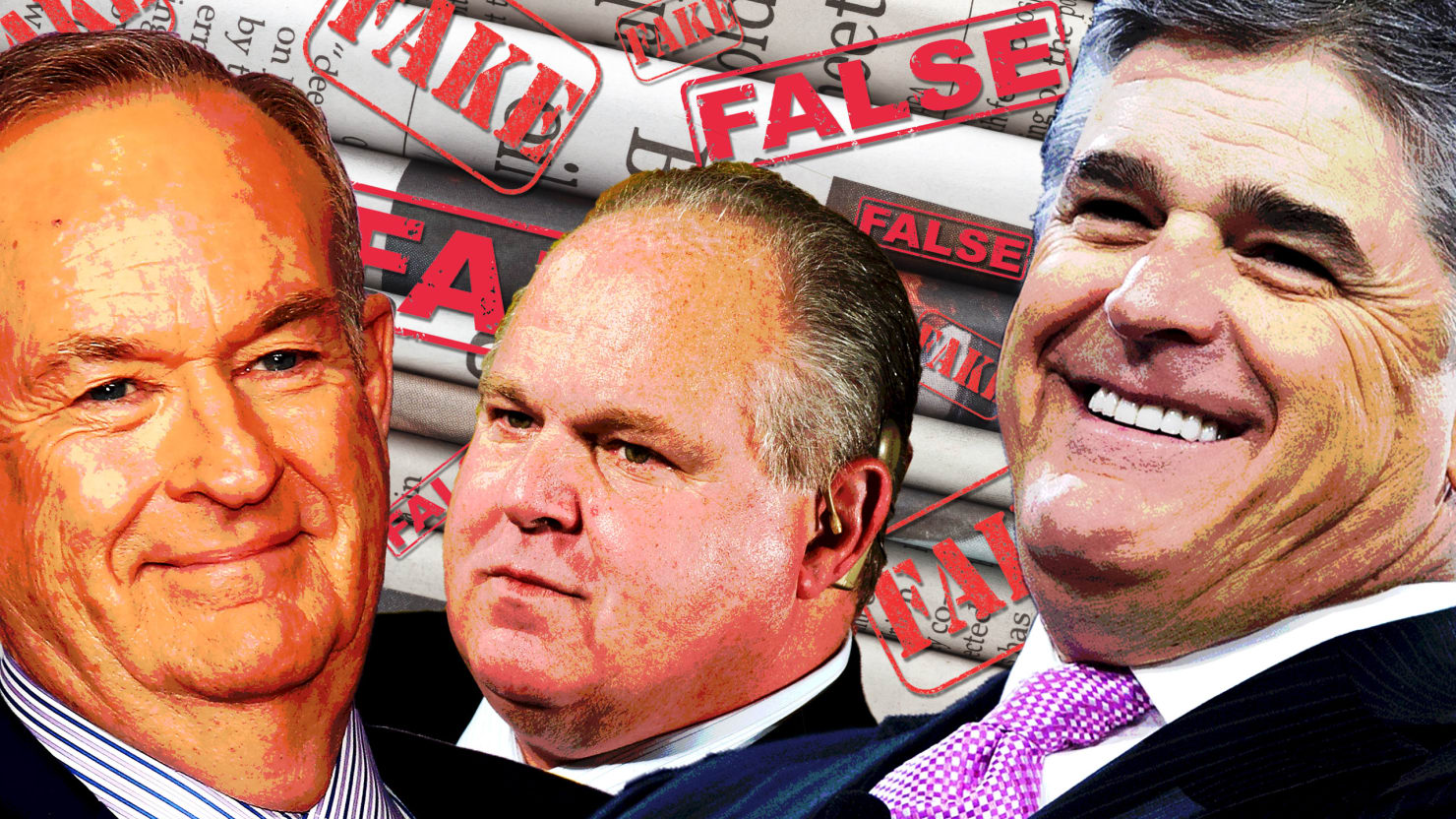
Still, under the broken-clock theory of logic, Trump occasionally (if unintentionally) strikes on a salient point. What if he could revoke FCC licenses? The question is less one of power than programming. Trump has floated the idea of equal air time before. But what would Republicans put in its stead? The GOP is terrific at bellyaching (Hannity, O’Reilly, Limbaugh), less so at belly laughs. 

Consider: Name one politically satirical TV show that is conservative. There was once Dennis Miller of Saturday Night Live fame, but his humor became so obscure even he didn’t get his jokes. Other right-tilting comedians include Tim Allen, Jeff Foxworthy, Adam Sandler and Larry the Cable Guy. But they joke about politics about as often as they do pedophilia.

Now consider the other side of the ledger. There are no fewer than seven big-budget comedy shows making Koch-like money skewering President Carrot Top: The Daily Show, Last Week Tonight with John Oliver, Full Frontal with Samantha Bee, Real Time with Bill Maher, The Late Show with Stephen Colbert, Late Night with Seth Meyer and The Opposition with Jordan Klepper. And that doesn’t include Saturday Night Live’s Weekend Update, The Trump Show on Comedy Central, or the increasingly leftward leanings of mainstream comedians Jimmy Kimmel and Jimmy Fallon. All but Klepper were born during Democratic presidencies.

What gives? The most common answer I get is “Republicans aren’t funny.” But we know simply from the success of Republicans’ non-political entertainment that this isn’t the case. Sandler’s movies clear $83 million a flick. Allen’s Home Improvement ran for nine years and took more than a dozen Emmy Awards.

The issue, then, must be the material more than the emcees. And here’s where you find the comedic difficulty of conservatism.

Like journalism, comedy requires editorial freedom to work. It also requires watch dogging, critiquing and whistle blowing when the system goes off the rails — hardly a skill set sought in quarters that seek order or discipline, like the military, government or church.

Picture a Republican TV show that excoriates Trump for a boneheaded comment. Or teases the religious right. They’d be shut down in a week — by Republicans. When you take god or the president off the comedy menu, you’re left with a plateful of limp-noodle punchlines. And little to aim at besides people telling the jokes.

Which as been the sole stratagem left standing for the alt-right. A day after the Vegas shooting, Sean Hannity went on the air to play a montage of comedy shows that took a moment to recognize the massacre — and make a call for a change to gun laws.

Hannity vomited some nonsense about the left’s unquenchable desire to politicize American sadness.

But the shows were right, if only on a visceral scale. We are sad. And mad. And goofy and dumb and eager to address issues of the day, bigly (it means “to handle with great force, often emotionally”). So loosen up, Foxtards. There are literally millions to be made with just a dash of humor.

But here’s a tip. When you go looking for the show’s band leader, don’t bother Eminem. I don’t think he likes you.


What happened last night in Vegas is unspeakable. So of course Sean Hannity spoke.

“This is no time to politicize the tragedy,” he belched on Fox.

What insanity this? He then went on a rant against the “liberal media,” who would surely try to make this a political hot potato.

Do you not already smell that potato, Sean? You just popped it in the oven.

What’s far worse, however, is the logic the state’s news service used in ducking the issue that rains on us like Irma’s hellfire. By that logic, when would it be a good time to bring up any issue you’d care not suffer? There were 11,680 gun violence death in 2016, Justice Dept. says. That’s 30 grieving families a day, Sean. Okay to discuss when they’re in mourning?

Heck, why politicize Puerto Rico when all of those Americans are without water and electricity? Why talk about police-related shootings when at least two families’ lives have shattered?

Now is exactly the time to talk politics. This week’s column was supposed to be about the brilliant Ken Burns series The Vietnam War. We will save that fawning for later.

But it is interesting the series arrived days before the massacre. Through 10 episodes, we learned how to measure human losses on the military scale. Should they have waited longer to say something? After all, 58,000 American families were grieving, right Sean?

Movements — and the laws that follow — are smelted in the fury at injustice.

How else to describe this? When one man can  kill 59 (so far) and injure another 525?

That’s not even a shooting. It’s a military incursion. So please, Sean, unless you have something politically constructive to say — in any direction — amidst this insanity, do shut the fuck up.