The Hollywood Bowles

Those who can't write, edit. Those who can't edit, blog.


I had the honor last week of being interviewed by Detroit Public Radio for the 25th anniversary of the word “carjacking,” which we coined at the Detroit News in 1991.

The request stunned me. As did news that Wayne State University even had this copy in a file somewhere (and that WDET found it). Thank you to both.

For more than a decade, I’ve worked as a film critic. And have plenty of useless TMZ-like celebrity anecdotes with which to bore strangers. But to this day, few outside the family believe that the story above was the first time the word “carjacking” had ever been printed, or that I who wrote it. The interviewer, though, did her homework. Her questions were sharp, and raised urban myths I didn’t even know existed, like that the word was a riff of New Jack City, the movie that came out the same year.

I admitted I’ve still never seen the movie, though I know it was a hit. In truth, the word was just  a riff of hijacking; We needed something catchy, as the Detroit Police Department referred to the crime only as R.A./U.D.A.A. (Robbery Armed/Unauthorized Driving Away of an Automobile). The editors said I was free to do the project — as long as we had something better than R.A./U.D.A.A. It’s a mouthful  to type, let alone say or read read.

IMG_0871

But during the interview, I realized that the catch-phrase not only made my career; it helped helped me leave it.

Before we wrote the story, Detroit was already seeing a spike in the new crime. I mapped FORTY in one week. Then a kid, 21-year old Jerry Borieo, became the crime’s first official homicide victim. Six days later, a 22-year-old woman, Ruth Wahl was murdered for her Suzuki. We scrambled to turn the story. Slapped a copyright symbol on the article, splashed it on the front page, and skipped our way to catch-phrase infamy, network TV interviews,  even a Pulitzer Prize nomination.

And I was beginning my skip away, period. I realized, as we spoke in the radio interview, that the story marked my first step away from crime. How much of my life had been spent preying on the grieving: mothers of dead kids; witnesses to to the merciless; atrocities embodied? The greater their grief, the greater my story.

So as the Detroit News gained gravitas for recognizing  — and nicknaming — another city-borne plague, I was craving  the intentionally trivial: entertainment. I used the story’s cache to join People magazine as a freelancer to cover movies, a business that measures disaster in box office and claims as art Pauly Shore and Electric Boogaloo 2.

But it was the antidote to the palpable…sadness. And remains so. I’ll take the inane over the insane, any day. It’s a lot easier, I’ve discovered, to ask a studio exec why his movies suck than to ask a grieving mother how she’s feeling

Wrapping up the interview, the producer asked if I missed the city, nonetheless. I told her terribly: I keep spare Detroit Tigers bumper stickers as tribal symbols and emergency adhesive. tigersI miss the Renaissance Center (from Windsor, it looks like Detroit flipping Canada the bird)rencen; Greektown (which has very few actual Greeks); even the financial black hole that remains the People Mover (it only moves you in a small downtown circle).


But I especially miss the people who deal with real life, everyday. Like my oldest friend and his boy, who live there still.

There was an elderly woman I once interviewed at the News, known in the neighborhood simply as Ms. Hattie, who owned the last standing home on a crime-decimated block. I asked her why she refused to leave. She told me her mother gave birth to her there. That her love of that home was a helluva lot more powerful than her fear of thugs.

That’s Detroit. No matter what catch-phrase you give it.


You are not your age,
Nor the size of clothes you wear,
You are not a weight,
Or the colour of your hair.
You are not your name,
Or the dimples in your cheeks,
You are all the books you read,
And all the words you speak,
You are your croaky morning voice,
And the smiles you try to hide,
You’re the sweetness in your laughter,
And every tear you’ve cried,
You’re the songs you sing so loudly,
When you know you’re all alone,
You’re the places that you’ve been to,
And the one that you call home,
You’re the things that you believe in,
And the people that you love,
You’re the photos in your bedroom,
And the future you dream of,
You’re made of so much beauty,
But it seems that you forgot,
When you decided that you were defined,
By all the things you’re not.

e. hemingway


Pity poor James McGill.

He’s got a brilliant, condescending older brother who undermines his career dreams. He’s got such a penchant for scoundrels  he becomes known as ‘Slippin’ Jimmy’ in the neighborhood for his staged injuries. He has the Albuquerque branch of the Mexican drug cartel miffed.

And now he has to carry on the legacy of one of the greatest television shows of all-time, Breaking Bad.

Better Call Saul, which launched its second season this month, stands as a marked improvement over its smart-but-sporadic freshman year. Two episodes in, the series already has recovered some of the dark humor and violent tension that defined Vince Gilligan’s landmark preceding show.

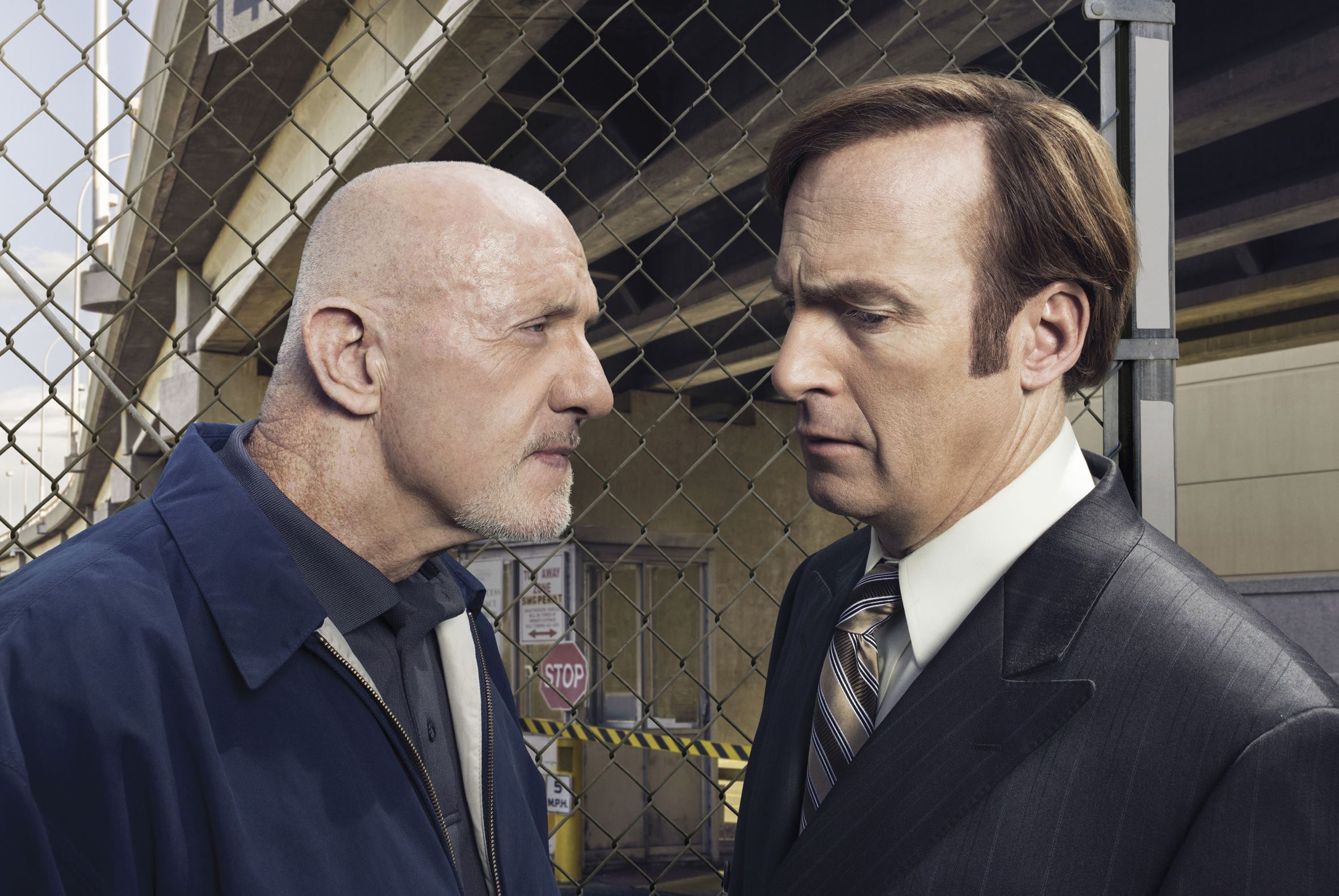
Saul Goodman (Jimmy changed his name to match his motto: ‘S’all good, man.’) now has a love interest. A company  car and his own digs. He’s even smoothing out the relationship with soon-to-be hired gun Mike Ehrmantraut. mike n saul

Of course, that puts Saul — and creators Gilligan and co-creator Peter Gould — in something of a pickle. As the chronological predecessor to Breaking Bad, Better Call Saul must, eventually, return its hero to the place we first saw him: In Breaking Bad climes, as a pretty sleazy Yellow Pages injury attorney.

Consider how Saul was first described by Jesse Pinkman in Season 2, Episode 8 of Breaking Bad: When you’re up against the wall, “you don’t want a criminal lawyer. You want a criminal lawyer.”

And while he was great comic relief, Saul also was, in truth, a racist  and chauvinist. He openly propositioned his secretary Francesca (“You’re killing me with that booty”) and confided in Walter the reason he changed his name: “My real name’s McGill. The Jew thing I just do for the homeboys. They all want a pipe-hitting member of the tribe, so to speak.”

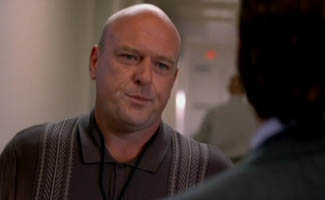
The Breaking Bad Saul even sassed the feds. In the same episode, he trades barbs with DEA macho man Hank Schrader, who offered an unsolicited review of Saul’s daytime TV commercials. “I’ve seen better acting in an epileptic whorehouse,” Hank taunted.

hank n saul

“Is that the one your mom works at?” Saul snapped back. “She still offering the two-for-one discount?” Saul is decidedly gentler in his own series, and Gilligan and Gould  would appear to have wedged themselves into a creative corner.

But Gilligan takes to pickles like a kosher dill. He is the first to admit he likes to write his characters into near-inescapable peril — then have them pull Houdini-esque escapes. Gilligan said he knew, for instance, that he wanted to end Season 2 of Breaking Bad with a plane crash, even though the series had been as landlocked as a dehydrated scorpion. So he wrote the season finale first, then retrofitted the story arc to include an airline disaster.

Shades of those darker grays are surfacing in Saul. Just as Walt slowly circled the drain into villainy in Breaking Bad, Saul appears headed for a fate that will change his law-office nickname from Charlie Hustle to Charlie Hustler. Just how dark a fate? In Gilligan’s hands, you’re almost scared to ask.

Still, Saul deserves credit for understatedly fixing what Hollywood movie studios still can’t: creating tension in a prequel. There’s a certain lack of suspense in an opening chapter: After all, your hero has to survive an origins story if chapter two is already written (and a hit). Gilligan and Gould circumvented that by making Better Caul Saul both flashback and prequel, leaving us to fret over his ultimate fate.

Of course, Saul the man still has a ways to go before he becomes a lovable lowlife, just as Saul the show faces its own challenges turning sinister: Mike continues to look older than he did in the “sequel” show, and capturing any of Breaking Bad‘s bleak lightning in a bottle would seem an impossible appeal.

But in the courtroom of television drama, even a shadow of Breaking Bad is a convincing argument. And in Gilligan’s and Gould’s hands, s’all good.


As grim as the news has been of late, give this to Fortuna: At least she has a dark wit.

Why, were it not for the gallows humor that is the GOP, The Daily Show would have perished already. Please, Comedy Central, consider a host (like Larry Whitmore) who has the snarky cynicism of a political insider, not the baffled chuckle of a tourist. For now, though, all Trevor Noah need do is aim his camera at the Republican Party, and it will send in the clowns.

https://www.youtube.com/watch?v=NZV7HHbbYhw

And then there’s the absurdity between the U.S. government and Apple. In investigating the San Bernardino mass slayings, the U.S. District Attorney attempted to crack the encryption code on the shooter’s iPhone. The execs at Apple (a notoriously petulant and uncooperative bunch) responded that their new IOS 8 was so invulnerable that even they can’t hack into the new operational system.

In response, the District Attorney’s Office hustled two bureaucrats on Charlie Rose to castigate the corporation, rightfully doubting the company’s claim of invulnerability (sure does make for a nice ad) and absurdly asking that Apple go back to the more-hackable IOS 7 (has technology ever moved backward?).

But the larger question — one Rose failed to ask — is this: What did the feds think was going to happen? Apple is already under investigation for skirting the US Treasury of more than $64 billion in taxes.

But Washington’s need to sniff the thrones of profitable syndicates, from Smith & Wesson to Pfizer to Bank of America, has fed a creature that’s grown larger than the creator.

And it’s hungry.

That’s the problem with monsters.

You never know who they’ll kill.


Every year, international corporations vie mightily for the semi-regular HB Commercial of the Month Award (celebrating its first anniversary…some day). Particularly on Super Bowl Sunday.

But before we announce the HBCMA winner (sorry for the nerve-wracking tension), a note on the Super Bowl itself. It sorta sucked a little.

But still interesting, because the story will become more dramatic over the decades as historical accounts replace actual. While it was a really a turnover- and penalty-ridden  slugfest, dramatic historians will rewrite it as the triumphant final run of Peyton Manning, finishing a Hall of Fame career with a Super Bowl trophy and a scoring pass.

So for the readers of this in centuries future, know this: It wasn’t that dramatic. Billed as a showdown between superstar quarterbacks, distanced by age, race and worldview, neither guy played particularly well. Truthfully, the game was a defensive gem, i.e., dull.

As, largely, were the commercials. If the 50th Super Bowl ads had a through line, it’s this: Pharmaceutical companies have way the hell too much money. Primetime Super Bowl ads on constipation and irritable bowel syndrome?  American poop must be big business. Budweiser commercials railing against drunk drivers? NFL ads on how the sport is really for women? You’re disqualified simply for hypocrisy.

The winning ad comes from, of all corporations, some organization called Avocados in Mexico, which touts exactly what you think. Hopefully, they’re as good as their ads. I don’t know who directed this, but said director deserves an immediate U.S. TV show, if only to counter the dull comets who orbit the reality show landscape. The ad:

https://www.youtube.com/watch?v=1ndPEQCoSzk

The literary award, though, goes to the ad for a Toyota Prius. In just 1 minute, 40 seconds the commercial manages to tell a story (a bumbling bank heist) establish sympathetic heroes (they leave some of the stolen booty to the car-theft victim) and manage a running story that would be worth watching. The director of this commercial deserves, at least, to be Michael Bay’s well-paid life coach, just to teach the guy succinct storytelling. The big winner:

https://www.youtube.com/watch?v=MYeM-8hO3hM


You know you’re in trouble when Hollywood starts talking about you.

Just look at Steve Jobs. His death gave birth to six biopics in two years   (it will be interesting if history renders a verdict of Jobs as a Henry Ford or P.T. Barnum).

Similarly, NFL Commission Roger Goodell, Tinseltown has you in their sites.

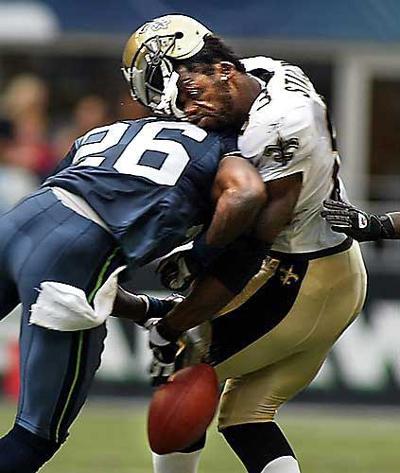
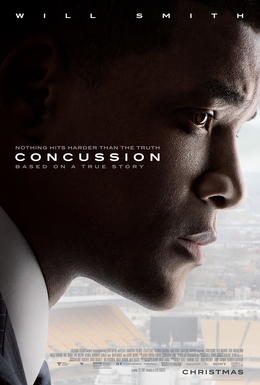
Hollywood has done myriad documentaries on the risk of helmet-to-helmet injury. But the true salvo came in November, when Sony greenlit the  feature film Concussion, with Will Smith. Though the movie was a steaming bowl of turd, the story — about the coroner who discovered the concussion syndrome CTE in 2003 and tried to warn the NFL about risks —  was a game-changer.

concussion


Artistically, the best thing about that film is that it ended. Eventually.

But that one of Hollywood’s biggest studio threw down with the biggest industry in professional sports is the larger distinction. Once, Hollywood viewed football as the sport of American heroism: Winning one for the Gipper; Marshall University’s resolve to play on despite a plane crash that killed most players; the grit of Rudy.

Now, the NFL is the mustache-twisting villain on the train tracks.

This won’t diminish today’s Super Bowl, of course, enjoying its 50th birthday with much pomp, circumstance, and pre-pubescent child singers. Football has never been more popular, now reserving two more days of the week, Monday and Thursday. NFL teams are holding games in London and Mexico for an international audience. If held to popular election, Super Bowl Sunday would win hands-down over Election Day as a federal holiday.

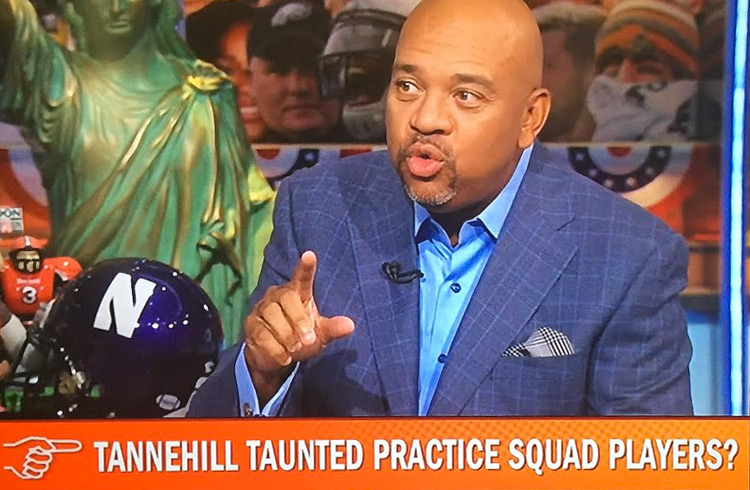
And ESPN is going apoplectic at the thought of the decline of its blue chip stock. Commentator Michael Wilbon, a grumpy former colleague at The Washington Post, has made a catch-phrase of this refrain:  “The NFL will never die because people love to see other people hurt.”

wilbon

He’s got a point. The Greeks and Romans practiced a more savage game in gladiator matches, and that was the world’s most popular sport from 100 BC to 325 A.D. The Greek philosopher Marcus Aurelius, himself a former gladiator, once urged that the kill-or-be-killed exercise was a necessary step in the ascension to manhood.

“It is not death that a man should fear,” Aurelius wrote. “But he should fear never beginning to live.”

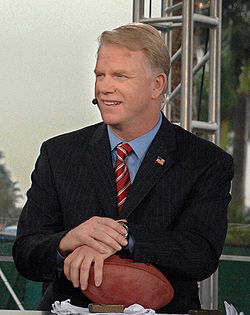
And the NFL has similarly vocal support. This is the 50th anniversary of the championship, and never has the media sniffed the throne of a game more. There were two prime-time shows this week about the sport’s best Super Bowl commercials. With former athletes as  commenters (Your seat in hell is reserved, Boomer Esiason). esiason

But as philosophers also say, pride goeth. And while the sport currently enjoys a pinnacle perch, the sport is following an eerie trajectory of not only the ancient Greeks, but a contemporary sport, boxing:

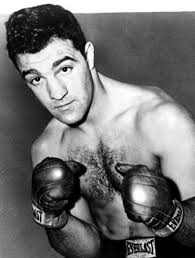
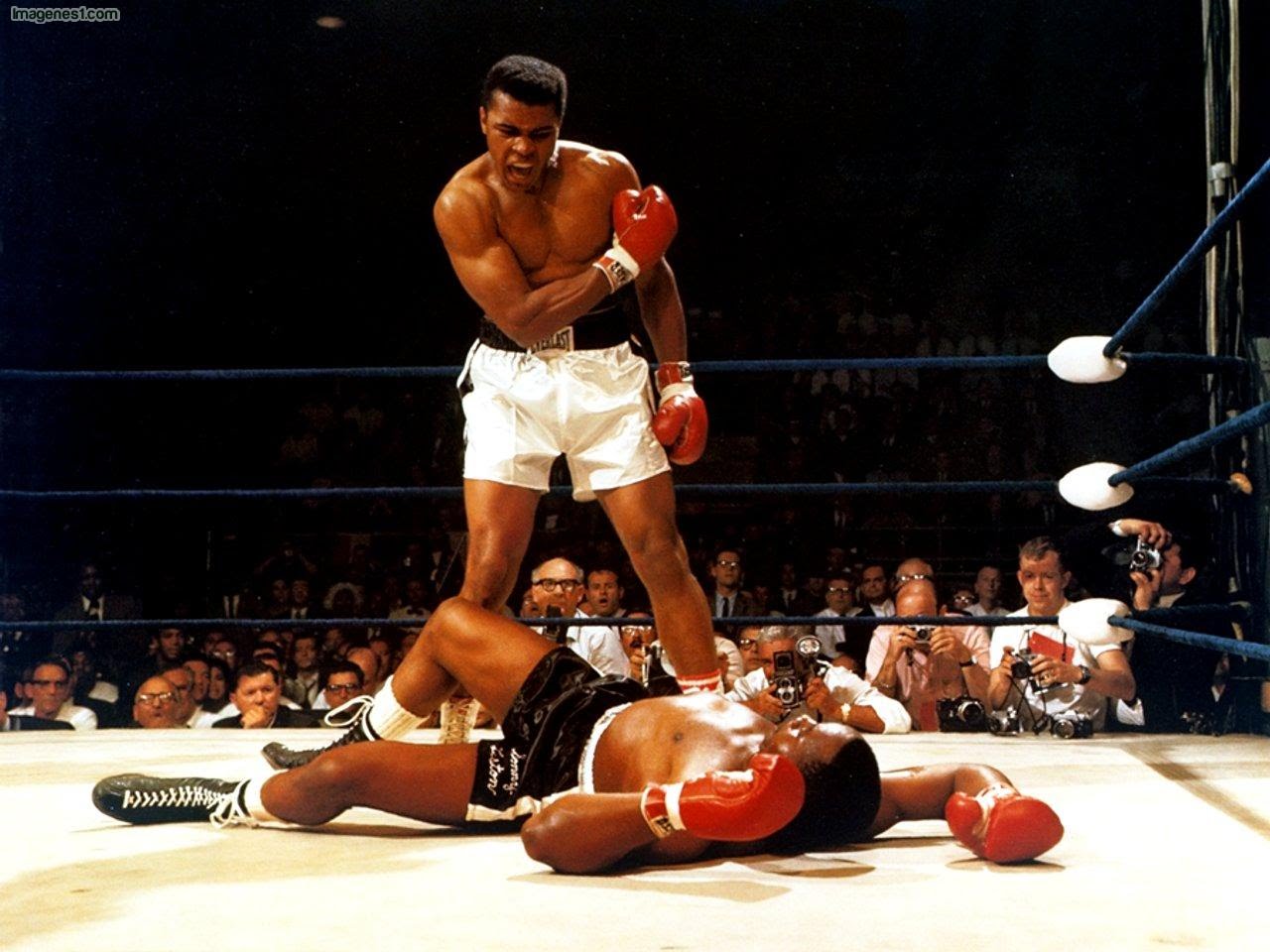
Overreach. Like football, boxing was the most popular sport in the nation, dominating headlines and coverage for 80 years with heroes the United States once reserved for war heroes. Joe Louis, Rocky Marciano and Muhammad Ali were more recognized than Coca Cola. louisrockyali


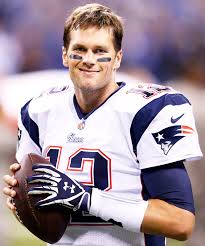
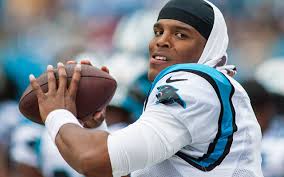
Football has a similar trifecta in Tom Brady Peyton Manning and Cam Newton, also all big endorsers of the endorsement. Commercially-concocted heroism never ends well.

tompeyton  cam

  •  Gambling. Boxing was quartered and fed to junkyard dogs by organized crime, which paid off boxers to take a dive. The sport became so fractured with competing illegal interests that, since 2004, we have not had a unified heavyweight boxing champion, once as preposterous a notion as flying cars. Similarly, the NFL is under federal investigation for its ties with fantasy football leagues, which are as crooked as my handwriting. league


  • Denial. Boxing finally recognized the danger of concussions, and grudgingly conceded in 1955 a syndrome known as Dementia Puglistica, virtually identical to CTE. But the sport — with the NFL shouting an “amen” from the pulpit — claimed the brain injuries required a genetic precondition and posed a risk to only two types of athelets — boxers and steeplechase racers.  To this day, the NFL insists that linking 70,00o blows to the head — which an average NFL lineman receives — to brain damage remains a questionable science (apply parallels to the tobacco industry here).

Windbag analysts love to counter that the sport isn’t in similar jeopardy because it appeals to a better-protected, more-aware demographic: teens (you know you’re listening to douche bags when they talk about reaching the right demographic, a fancy word for ATM).

But to those who prostitute in sales and hype, consider. There is but one demographic: child-bearing mothers. They are the first to recognize brutality, and the first step up to keep their children from engaging in it.

Today, boxing is a niche sport, filled with poor, uneducated athletes who fight for money or anger. Name one parent you’ve ever heard proudly boast “my boy is trying to be a pro boxer.” Now name a parent who doesn’t beam that the kid got a scholarship to a punishing college football powerhouse.

That tide may be shifting. With the high profile concussion-deaths of Mike Webster, Junior Seau and Ken Stabler, with the terrifying mountain of evidence that even a sport like high school girl’s soccer is a concussion risk, how many parents will want their offspring entering this workplace:

Are you ready for some badminton?


HAPPY BIRTHDAY RAFAEL!

To my dear dear nephew,

You are delightfully too young to realize it, but one day you will be delightfully old enough to remember the Olden Days.

One day, when you are ancient like me, a boy who is new like you will ask when you were born. And you’ll say “2010.” And his eyes will widen. He may whistle. And he will say “Wow, you don’t look old.”

And you can smile, and thank him (you have always been gorgeous, and will hear that often). And you can tell him this about the year of your birth:

  • The iPad was invented.
  • J.D. Salinger died.
  • The New Orleans Saints won the Super Bowl (though it coulda been Indy).
  • The average house cost $268,000.
  • A gallon of gas cost $2.73, bread was $2.49 a loaf and a pound of potatoes cost an average of 52 cents.

But that won’t really tell him what the Olden Days were like. That wasn’t really life in The Tens (use that term, just to blow his mind). To do that, you can tell him — as can all generations to the ones that follow — this:

“The Olden Days were wondrous, full of hugs and kisses, dancing and playing, smiles and laughter (so much laughter!).

“Of friends that would fight for you. Of family that would die for you. kidsRafiRomeo

“Why, in the Olden Days, a boy could turn six and lose count of all the creatures who loved him, thought of him, big and small.

“The Olden Days were sparkly, golden days.

“Like today.”

— uncle scott and the Hounds of Love


I really should learn Spanish.

About all I know is hola, adios and Lo siento por los perros (Sorry about the dogs.).

I could have used a Spanish lesson today, at Ralph‘s. Mom has taught me to appreciate the affordable things in life, and I’ve found a wine so cheap I’d hesitate to call it low brow, lest it imply it’s got a brow. It can be found at your finer 7-11s, Circle Ks and Kum & Gos (a real chain, I swear.).

kumngo

I was looking for my cheap swill today when a woman tapped me on the shoulder. I turned to find a diminutive elderly Hispanic woman, saying something in Spanish. She didn’t have a shopping cart, just a five-pack of Bic lighters in one hand.

She said something that I assume was akin to “Would you please help me reach something?” But knowing nary a Spanish vowel, she may have been saying, ‘Yo, gringo cracker, I need something.’

And after what happened, I kind of hope she did.

I shook my head at her words, told her I didn’t understand Spanish (oh yeah, another term you have to know here). She took me by the arm, led me to the Coors beer refrigerator, and pointed to drinks on the top shelf, beyond her reach.

Already, I was tickled at the notion that granny needed to get her drink on. Then I fell more deeply for her.

I touched a 12-pack. 12 packShe shook her head, nodded left.

I touched a six-pack. sixpackShe shook her head, nodded left.


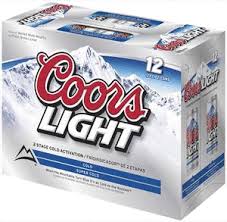
Finally, I touched a tall can of Coors light, the biggest can in the fridge.

can

She nodded, beckoned for it. I brought it down, then asked the final word I know in Spanish: “Uno?”

She nodded and, without word, padded toward the checkout. Bics in her left hand, a Coors Light in her right. And my mind collapsed on itself with questions: Was she getting it for her husband? (Probably not, unless she’s put him on a limit.); Was this her way of unwinding?; does she enjoy the NFL playoffs with some smokes and brew?

I knew the answers none, but it was fun to picture her kicking back, making smoke rings and burping. And reminded me; I’ve got to learn the Spanish translation of “Ma’am, you are one of the coolest badasses I ever met.”


pennchapo

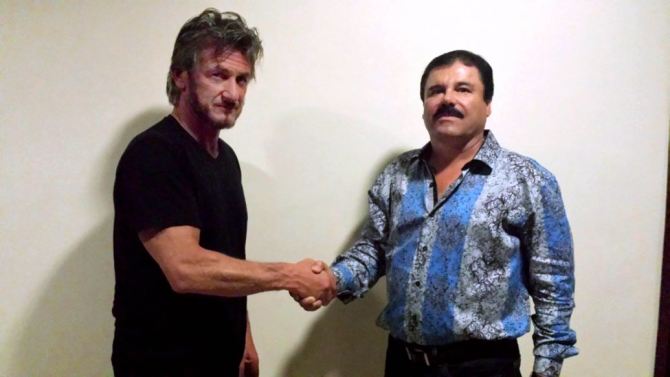
I can’t decide whether I’m thrilled or mortified by the Sean Penn interview with Joaquin “El Chapo” Guzman for Rolling Stone.

On the one hand, the piece is testimony to the power of the press, like Edward Snowden’s revelatory interviews with The Guardian, the New York Times and the Washington Post. Good journalism challenges the powers that be, whether it’s government overreach or police ineptitude. That the Fifth Estate found the most wanted fugitive alive speaks volumes about the need to keep voices free — and inquisitive.

On the other, that Fifth Estate member is Sean Penn, which makes me want to barf on my shoe.

The nausea comes from Penn’s self-described role as reporter. He called his story “experiential journalism,” which is about as valid as being a reporter on social media (would you risk a “social dentist,” or fly on a commercial jet helmed by a “social pilot?”).

“Experiential journalism” is journalism; it simply means doing it in person instead of via phone. And Hunter S. Thompson already gets credit for the term with  “gonzo journalism” (the same thing, but with an actual writer) in his 1966 book Hell’s Angels: The Strange and Terrible Saga of the Outlaw Motorcycle Gangs.

But the more I read of the Rolling Stone interview (and the story itself), the more convinced I became that Penn is simply gathering material for a political comedy about an oddball actor who lands an interview with a fugitive drug lord, trailed by a phalanx of Keystone Cops and a bumbling press corps.

The film could include real elements of the story, which was sent to Chapo for pre-approval (Your journo license is revoked right there, chump.) and likely printed unedited because of Penn’s celebrity. And that’s too bad, because he reeeaaalllly could have used an editor:

  • “Disclosure: Some names have had
 to be changed, locations not named, and an understanding was brokered with the subject that this piece would be submitted for the subject’s approval before publication.”  Well, at least you’re warning us it’s ethically dubious.
  • About his personal pilot and researcher, Espinoza: “Espinoza is the owl that flies among the falcons.” Huh? What the hell does that mean?
  • “At 55 years old, I’ve never learned to use a laptop. Do they still make laptops? No fucking idea!” Spoiler alert: yes.
  • “I throw my satchel into the open back of one of the SUVs, and lumber over to the tree line to take a piss. Dick in hand, I do consider it among my body parts vulnerable to the knives of irrational narco types, and take a fond last look, before tucking it back into my pants.” Did you write with it, too?
  • “At this moment, I expel a minor traveler’s flatulence (sorry).” In the book, he’ll document having the runs.

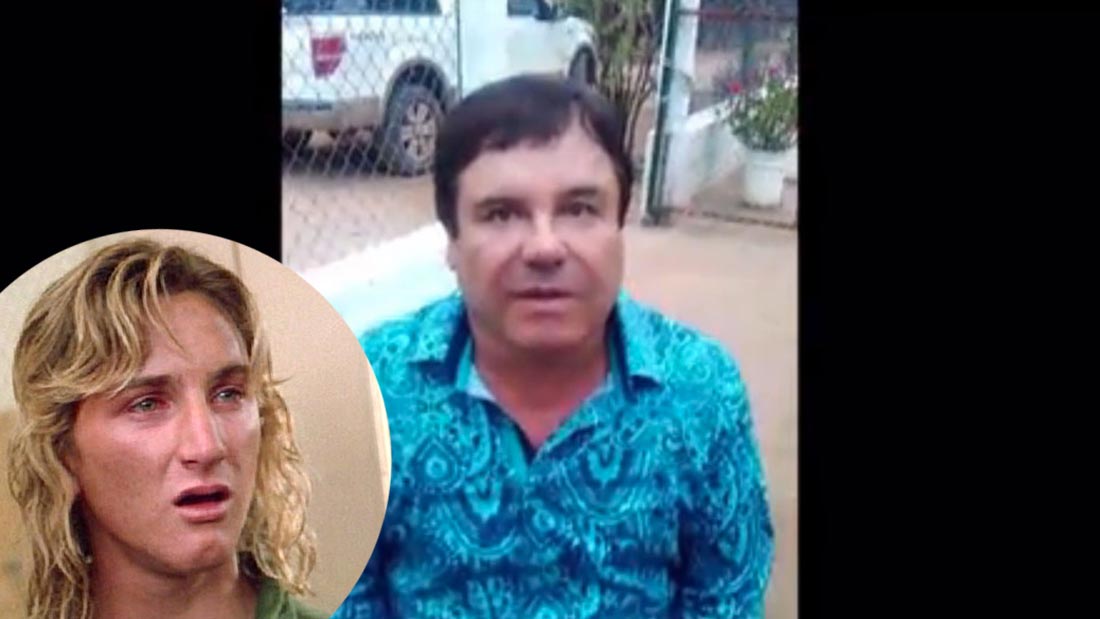
It would all make for terrific comedic terrain Penn hasn’t wanted to touch since his days as stoner Jeff Spicoli in Fast Times at Ridgemont High.

spicoli

And he should revisit comedy, because he’s a funny guy. Well, not so much funny funny as weird funny.

The first time I interviewed him, he granted only four reporters access for 2004’s  The Assassination of Richard Nixon, a politically ambitious but muddled film.

I was his last interview of the day, and assumed, by his demeanor, he was tired of press asses. While I knew the real-life story of would-be assassin Samuel Bicke, Penn’s character, I could not muster Penn’s interest. He sat in profile to me in his seat, looking at a wall and eating steak while he offered largely one-word answers.

Defeated by interview’s end, I walked out, uncertain how I would concoct a story of mumbles. As I walked out, his publicist, who was monitoring the interview, ran out of the room and caught me by the arm.

“Hey,” she said. “That was a really good interview. Sean appreciate’s smart questions.”

Had I not been so starstruck and green, I would have replied, ‘Then why didn’t he give smart answers?’ Instead, I mumbled a thank you and headed to assembled an article.

He must have liked it, because I got an invitation next year for another interview, this time for the political adaptation All the King’s Men. Only now, I was told in bated breath, Sean would eat with me in public, and would like to speak about politics.

We met in the outdoor restaurant at the Chateau Marmont. He again ordered steak — so rare in nearly mooed on the plate.

He was comfortable now, railing against the inherent flaws of American politics, the disdain for the poor, the lack of an Everyman voice. It was the Penn that would visit post-Katrina Louisiana — with post-game analysis. He conceded his disdain for religion (“Certainty is the disease of kings,” he said. “And I’m no king.”)

He finished the steak entirely. In mid-proselytizing, he lifted the plate to slurp the blood remaining — a fact included in the piece. Aside from a story I once wrote about witnessing an Arkansas execution, I had never received so many angry letters for being insensitively graphic.

But, in all likelihood, Penn knew that would be the reaction. And as I read the latest stories, watched the newest round of interviews, I realized: Penn is functioning as a reporter, just in its old-school iteration, as provocateur. Though Dad could write like a poet, he, too, was a provocateur: He was happy to pound on the front door of an accused cop, an indicted politician, an escaped convict. Provocation is the kindling of news.

Dad would have been proud of any reporter who beat the cops to the bad guy. But he likely  would have taken issue with sentences like “We sit within quietude of fortified walls that are old New York hotel construction, when walls were walls.”

Come on, Sean. That’s weird, even for an experiential reader.

https://www.youtube.com/watch?v=-7gzl2ZI1kE


Ziggy played guitar, jamming good with Wierd and Gilly,
And The Spiders from Mars.
He played it left hand, but made it too far,
Became the special man,
Then we were Ziggy’s Band.

Ziggy really sang, screwed up eyes and screwed down hairdo
Like some cat from Japan, he could lick ’em by smiling
He could leave ’em to hang
Here came on so loaded man, well hung and snow white tan.

So where were the spiders while the fly tried to break our balls?
Just the beer light to guide us.
So we bitched about his fans and should we crush his sweet hands?

Ziggy played for time, jiving us that we were Voodoo
The kids was just crass,
He was the naz
With God given ass
He took it all too far
But boy could he play guitar.

Making love with his ego Ziggy sucked up into his mind
Like a leper messiah
When the kids had killed the man
I had to break up the band

Ziggy played guitar