“You have turned for me my mourning into dancing: you have put off my sackcloth, and girded me with gladness.” — Psalms 30:11

“You have turned for me my mourning into dancing: you have put off my sackcloth, and girded me with gladness.” — Psalms 30:11

When thrown correctly, the knuckleball is the hardest pitch to hit in baseball.
Apparently, it defies most laws of motion. While every other pitch in the human arsenal — fastball, curve, slider, change up, etc. — relies on spin to give a ball movement, a knuckleball is thrown with none, allowing gravity and physics to make it dip, lift, curve, whatever nature decides. You essentially push it over the plate. Pro catchers hate it; it is so deceptive and dodgy, catchers can look like bigger fools than batters trying to track one.
I learned this in yet another documentary I caught (damn you, ESPN) that, it turns out, really wasn’t about baseball. Or even sports.
The talking heads were lamenting the dearth of knuckleballers, who once dominated the big leagues (my uncle Leonard, a former pro pitcher with the Georgia Crackers, had a good one, I’m told).  The toss is so difficult that less than a half dozen pitchers still practice it, and requires so much finger dexterity that a split nail can send a pitcher to the Injured Reserve List.

But it’s ego, not skill, that killed the knuckleball, the analysts said. Today’s sport (if not all modern competition) is defined by force, not finesse, and today’s Little Leaguers want to blaze 98 mph fastballs. A good knuckleball travels about 60 mph and takes, literally, years of practice and patience.
The film interviewed a few famed knucklers, from Phil Niekro to Tim Wakefield, diminutive men who said they turned to the pitch when they realized they didn’t have cannons for arms.
So I looked up their careers. Wakefield pitched for 24 years, Niekro for 23 (until he was 48, an octogenarian in the MLB).
But it was R.A. Dickey’s story that convinced me the knuckleball is The Everyman Pitch, the go-to backup when age and health and hope are on the wane.
Dickey was a flamethrower at the University of Tennessee, a right-hander deigned The Next Big Thing. The Texas Rangers came calling. He insured his whip for $1 million.
But during a routine examination, doctors discovered that Dickey lacked a particular ligament in his arm, a birth defect they said would end his career prematurely. Texas rescinded the contract, replacing it with a one-year deal for the league minimum, $75,000 a year.
Dickey weighed cashing in on the insurance, though it would mean he contractually could never pitch again.
Instead, he decided to rest his fate on the pitch his father taught him in their Nashville backyard (Dickey says his dad threw knuckleballs so that the boy, ever-hyper with a glove, would wear out faster chasing them). He took the contract and bounced around the minor leagues. He slept in a rental car and phoned his wife (his 7th grade sweetheart) and four kids with game updates. For a decade, no team would offer him a multi-year deal, fearing that his health and age would succumb before his abilities.
But in 2010, at age 34, he landed with the New York Mets, where he was to be used for occasional relief duties.
Instead, he won 11 games. Sportswriters noticed. Hitters noticed. And fans — many of them old enough to remember when the Mets didn’t suck — began turning out.  In droves, with signs and chants and ‘attaboys’ as word of the journeyman’s odyssey spread.
And in 2011, the Mets offered him his first real contract, worth $37 million over five years. He bought the family (now a brood of five) a house in upstate New York. His wife a new car. The kids college trust funds.
The next year, he won 20 games, was elected to his first All-Star Game, won the Sporting News Pitcher of the Year Award, and became the first knuckleballer to ever win the Cy Young Award, the sport’s greatest pitching honor.
He is still hurling today, still relying on fingernails and physics and fate to strike out men bigger, stronger, faster — but never more patient or crafty. Asked about his unlikely success, Dickey gave an answer that, ultimately, was unrelated to stitches and peanuts and Cracker Jack.
“At some point, I had to decide to be true to what I knew inside,” he said. “That’s the thing about knuckleballs. You try to bring your best to the mound. But in the end, all you can do is throw the best pitch you’ve got, and see what it does in the world.”

Jon Stewart exits The Daily Show tonight aloft so many laurels you’d think he was being escorted to the farewell ship of The Lord of the Rings.
But there are three groups whose reaction I await as much as I dread Stewart’s departure.
* The first is Comedy Central. How do you replace a show that was nothing less than a game-changer? Stewart’s 16-year span will be viewed as the 70’s salad days of Saturday Night Live were for scores of ascending stars, including Blues Brothers John Belushi and Dan Akroyd. The Daily Show had something akin in the news brothers, Steve Carrell and Stephen Colbert, who have similarly entered new celebrity orbits. Even the show’s B-list reporters, which included Ed Helms, John Oliver and Rob Corddry, made most primetime network comedies look like funeral wakes.
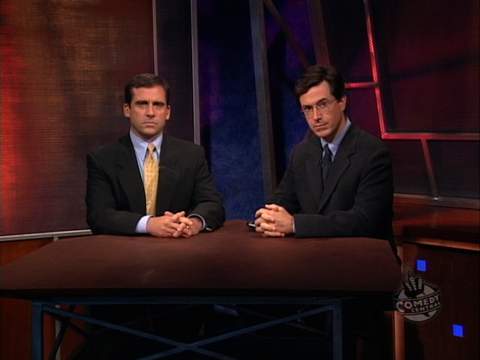
* What about the Democratic National Committee? Stewart was the party’s most recognizable (and influential) advocate outside of Barack Obama. A CBS poll found that 21% of Americans aged 21-29 — the new Democratic Party lifeblood — got the bulk of its news from The Daily Show. Producers may have found a young, hip, millennial-friendly replacement in Trevor Noah. But the show — at least as it skews now, which is D.C.-centric — thrived on a veteran jokester with real political acumen (and razor wire imitation skills).
Who will become the Left’s new beacon? Bill Maher’s ego makes even Progressives wince. Colbert will likely take a more centric tone as he replaces David Letterman on the national late-night front. The Democrats have always benefitted from having a sense of humor (why are the Right’s media spokesdouches — O’Reilly, Limbaugh, Hannity, etc. — such angry, pasty blubberers?) Hillary’s presidency is a lock, but DNC Chairwoman Rep. Debbie Wasserman Schultz would be wise to either champion a new megaphone for younger voters, or convince Stewart to take a more open, direct role with the party.

* Finally, I wonder about Arby’s. Stewart has always had a special spot in his heart for skewering the alleged meat vendor.
No one really knows why. Even Stwewart isn’t sure, confessing that the restaurant chain has always taken its ribbing in good humor. “And they really are wonderful folks,” the comedian once said on air.
Perhaps it’s the name. It sounds like a cartoon sound effect. Maybe it’s a lot easier name to lampoon than Burger King or McDonald’s. The all-time champ, though, is a 24-hour convenience store chain I discovered in Arkansas called Kum & Go. I swear.

Personally, I think Stewart got the idea from The Simpsons (he admits he’s a fan of the funniest sitcom of all-time). He has quoted Homer, welcomed Simpsons guests aplenty, even dropped the occasional ‘D’oh!’
I think he was inspired by a specific episode years ago, where Marge explains why you can’t trust commercials: “Homer, people do all kinds of crazy things in commercials. Like eat at Arby’s.”
Admittedly, I love the near roast beef and cheddar, which likely contains neither. Regardless, they won my heart with August’s official’s HB Commercial of the Month, on self-deprecation alone.
Fare thee well, Jon. Good luck in The Shire.

My sister told me on Mother’s Day that I was going to be a father.
Wait. That sounds awfully hillbilly-esque. Let me rephrase. In May, Caroline told me that birds were constructing a nest on my back patio.
I was surprised to hear. Normally Esme stands pretty firm in her patrol of the house, which she considers her own and rules like a plump matriarch.
One rainy evening, as I was showering, I heard Esme and Teddy sniffing around in the bathroom. When I opened the shower, I found a possum, corpse-like in the doorway. I grabbed a towel, peered down at the little fella — he looked like a baby, which routinely get separated from their moms in storms — and figured Esme killed it and brought it in to play fetch.
Or he could be playing, well, you know.
Adorned in only a towel, I leapt over the rodent to exit, certain it would startle, jump up and bite me in the slats. It didn’t, but after opening all the doors and heading to the garage for a shovel, I returned to find him gone. Mom taught him well. I never saw him again, despite a room-to-room sweep with Esme. I did, however, load the BB gun, just in case an angry mom returns for her child. 
Weirder things have happened. Los Angeles moonlights as Los Fauna.
I once saw a rooster in my backyard. My next door neighbor claims to have found mountain lion scat on his roof. A backyard woodpecker I’ve named Plastics starts rapping about 5:30 a.m., the front yard mockingbirds earlier (now that’s Tweeting, bitches). A coyote ate a friend’s cat. Esme’s never been fond of crows, and shoos ravens the size of ostriches.
But the nest changed things.
It’s in a seemingly ideal spot: A crevice under the patio awning, out of reach of the ambulatory and sight of the migratory. Safe from crows and roosters and mountain lions and ostriches and possums. Always shaded.
The tenants are unremarkable. Sparrows as beige as blandness, small and missable.  But once they moved in, I began paying attention. And Esme lost her aggression.
I spy them from the spa. They perch on the awning, eyeing a backyard that must teem with life unseen. I watch them dive bomb, quick and silent. If they catch an insect or crumb, they fly under the awning to gack into their kids’ mouths. They’ve even begun stopping at the dogs’ water dish for a sip.
And Esme doesn’t stir. Or even perk her ears. I think she’s had a Maude moment of enlightenment: “Dreyfus once wrote from Devil’s Island that he would see the most glorious birds. Many years later in Brittany he realized they had only been seagulls. For me they will always be glorious birds.”

I know fall is coming. You can feel it at night, that approach of stillness. Soon, the nest will be gone.
I will miss the sparrows. Maybe the dogs will, too. If they’re reading, chirptweettweetchirp (translation: “You are officially invited to move in and stay forever.”).
It’s funny, when you drop your guard, how easy it is to take another’s cause as your own.

After more than 15 years, I went into a Dunkin’ Donuts. Or, more accurately, acquiesced to go after a friend threatened driving into a tree if we did not stop there for dessert.
It’s not that I don’t like Dunkin’, or any other food in donut form. I think donuts should be on the USDA’s list of daily recommended supplements. I just have an odd memory of the place.
But now, it’s nothing like I remember. It was once an unofficial police precinct, known for its sugar, lard and whatever glurp they funnel into their filled donuts. Now, it’s Starbucks on a confection high.
Dark wood interiors. Flat screen TVs. WiFi. Smells more like coffee than donut holes, whatever the hell those were.
Even the bag has changed, into a recyclable sack of subtler fonts and hues.  A far cry from the good old poisonous plastic clutch, emblazoned with neon lettering that screamed where you ate.
  To go there meant taking the Culinary Walk of Shame.
I was taking one more than 15 years ago, when I lived in DC.
It’s a deceptive place, the elbow of the nation’s saluting arm. It was designed by PIerre L’Enfant, and the Capitol neighborhood itself is spectacular, as artistic a city as Paris.

Look deeper, though, and you’ll see that poverty concerns far outweigh political ones, that the homeless far outnumber the homes. I watched a drunken drifter roll out from under my Jeep one afternoon. He was using it for shade, sleeping. He would have been human jelly had I not been so anal about letting the engine warm up.
I came upon another homeless denizen 15 years ago, running home before an early-morning tennis game with Bill. 
She looked to be at least 50, though she may have been 16; like the sun, asphalt seems to weather skin mercilessly. She called out as I was grabbing the keys to the entrance of my apartment building, in downtown Adams Morgan, a catch basin for the city’s human flotsam.
“Hey, donut boy!” she shouts, spotting the bag a mile off. “Got any spare change?”
When approached by the homeless, I usually make eye contact and politely say no (except on Christmas morning). Today, however, I actually had dumped the few coins into whatever charity bin was on the counter, even though I suspect Dunkin‘ employees just emptied it into the register. Or gave it to the cops for protection.
“No, sorry,” I respond.
“Not even a quarter?” she asks. following me up the footpath to the entrance. “Come one, one quarter.”
“Sorry.”
Lady must have been trying out a new sales technique, one that employed doubt.
“How about a dime?” she says, about 10 feet behind now. “Ten cents?”
“I don’t have any change, sorry.”
I open the front door, pass through the second set of doors. I hear she must have wedged her foot before the front door could click shut, because it did not. I heard he entryway doors open.
“How about a nickel?! You saying you don’t have a nickel?!”
I don’t respond, just walk to my door, unlocked it, get stupidly confident.
“One penny??!!!” She is yelling now. “You don’t have one cent on you??!!”
Living room a few strides away, I turn, face her, get growly. “Lady, I don’t have one goddamned penny on me!” I bark, and slam the door.
About an hour later, running late to meet Bill. I open the door, and there’s…glurp. Lady left a full loogie on my front door, big and beaming as a Christmas wreath.
I’ve never been a big fan of Starbucks, or many places that engage in chic gouging (‘cept Harley). But I gotta say: I like the Dunkin makeover. Seems it would draw less of that haughty loogie crowd.
A buddy of mine has a daughter, now about five. The first newborn I’d ever held, Audrey was.
Now, she is razor sharp, like her moms n’ pops. I visited them recently, impromptu pizza. Usually, we do magic together, a vanishing act where she materializes from the ether.
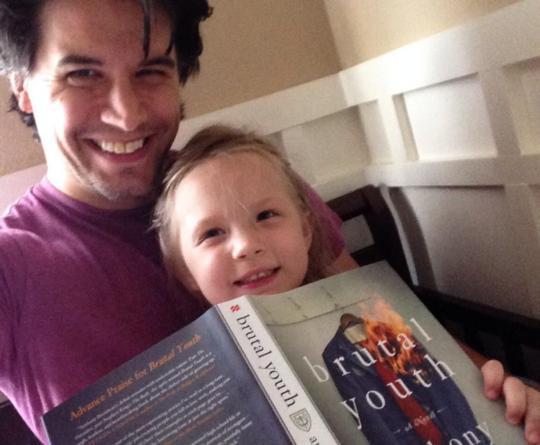
“Do you want to do the magic trick?” Audrey whispers in my ear.
“You know, never show a trick twice,” I tell her. “They’ll figure it out.”
“Do you have more magic?” she asks.
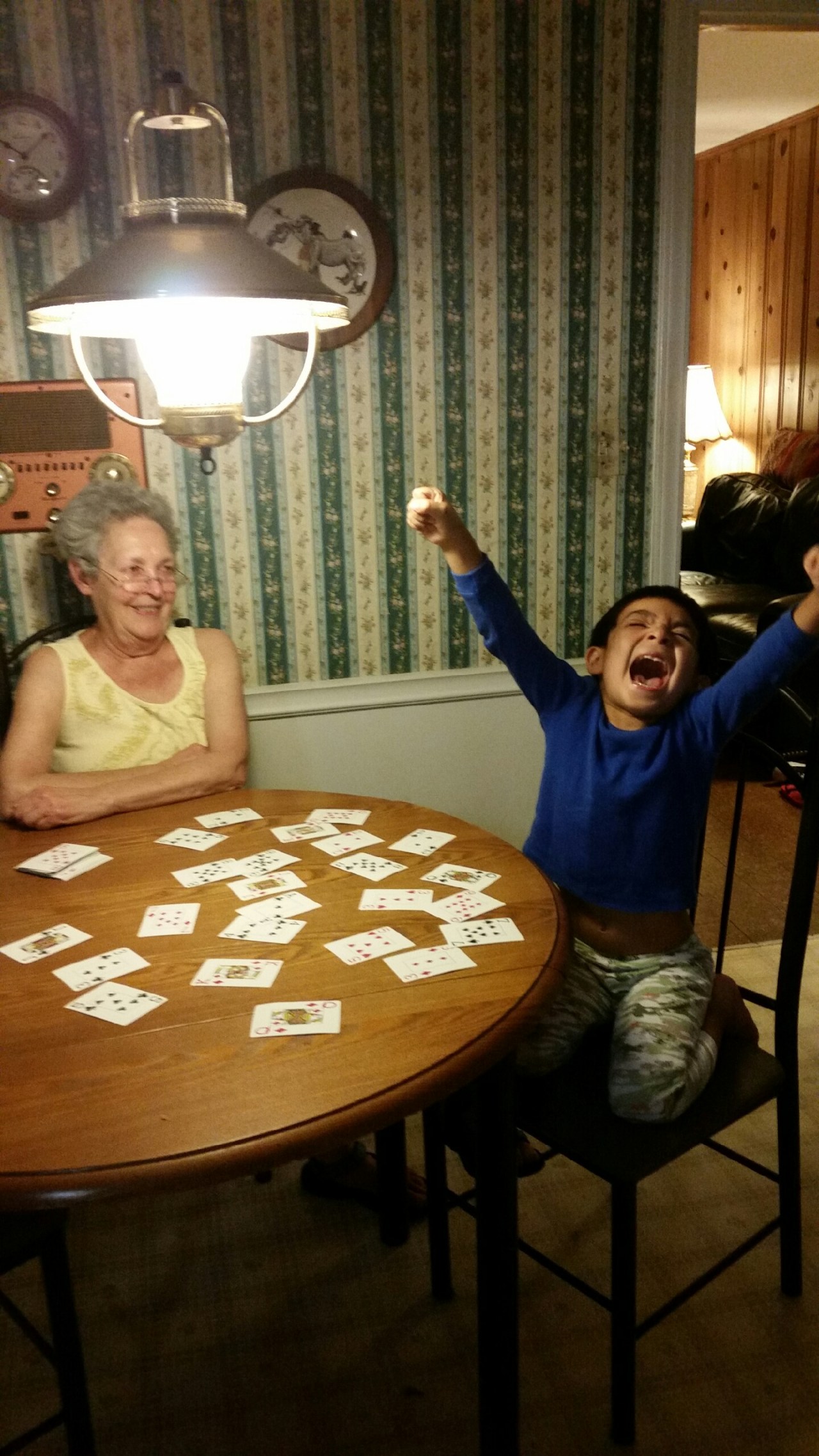
“I don’t know,” I respond. “Do you have cards?” A week ago, I never would have asked this of a five-year-old. But mom just told me that my nephew, Raphael, had learned cards. And, apparently, a victory pose when he holds the inside straight.
Audrey says she does, but they’re Disney cards, with princesses and ogres and elves and fairies. Even better, I say. I examine them, ask if she knows what the “K” card means.
“King,” she says. And I see mom was right; that is the age kids get the card concept. Audrey knows all the face cards, that a Queen trumps a Jack, any day. I show her a trick, which falls flat like weekend soda. There’s no hiding it in a kid’s face, that ‘uh-huh’ shrug.
“Know any others?” she asks. No way I win this room, I deduce.
“Why don’t I show you a card game?” I ask. “Do you know how to play War?” She comes up to table, for the basic instructions: one card each, bigger card wins both.
Then she asks something that makes me understand how kids magic is probably way too simple-minded, like its practitioners.
“What are the Aces worth?” she says. I suggest 11, the biggest card.
“Isn’t it sometimes a 1?” she presses, already skeptical after my failed illusion.
“It is,” I answer, surprised at the question. “We can make it either. Why don’t we say 11?”
“What about the Joker?”
I’m dumbfounded at the grasp being flexed in front of me. “Well, why don’t we make the Joker worth 1, since the Ace is worth 11?”
She agrees, and we begin the game. By the end of the first deck, she has the concept down. By the second, she takes over dealing. By the third, she is sneaking glances under the cards before deciding who gets which. I nearly spit soda through my nose in laughter as she strains, literally from the corner of her pond-sized eyes, to get an edge — particularly when she draws the useless goddamned Jokers, which always seem to land her side.
“Want another?” I ask, though I can sense her mounting boredom.
“No, you can take them,” she says. “But next time, let’s make the Jokers bigger than the Aces.”
Now that, I realized, is magic.
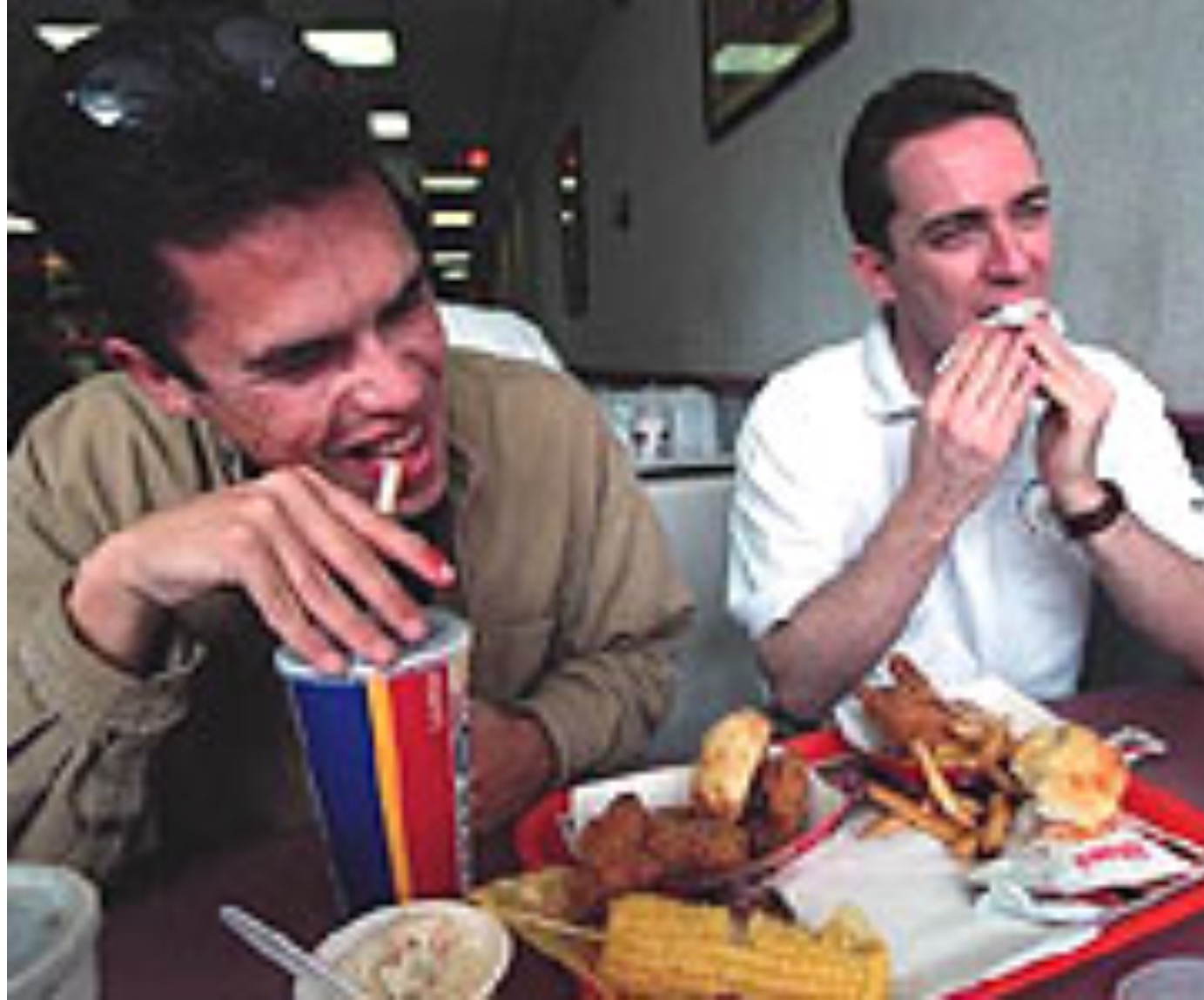
Michael should be 50 today. I should be giving him shit about AARP.
He didn’t quite make it, 47. Brain tumor, angry and aggressive and an appetite to die for. But at least twice a week, I want to call him, to chat documentaries or The Simpsons or The Braves or how much worse the third Mad Max was than the previous (man, he hated that flick; I thought would have an aneurysm as he fumed walking out).
Fragments of these things are still here, dude. But None holds meaning without You. Damn I miss you. I shouldn’t be here instead of you (though you would have insisted it so).
There was this talk we had once, about a year before he died. We were talking theaters (we met at one, went to hundreds), and how they had advanced since our days working box office, with newfangled seats that reclined and with the date-friendly armrests that lift. “You know what I want?” Michael, who never had a real girlfriend, once confessed. “To go to a movie and put the armrest up.”
I recently found the last note I wrote to him. He couldn’t read it, so I don’t know if he ever heard the words. But here’s another missive in the ether for you, just in case the afterworld has wifi:
From: sb <sbowles@gmail.com>
Subject: Michael Tyrone Bowles and Guy Scott Ingram
Date: November 12, 2012 9:03:42 PM EST
My man,
Do you remember when we first met, at Lenox Mall, working the theater? Remember how you’d knock on the counter when a cute girl was in line to buy a ticket, and how you’d pretend to drop money to make me wait on the Orca so you’d get to wait on the hottie?
Or how, when you moved to DC, the vagrants clung to you like orphans? That hobo who sat next to you on the bus and ate that clove of garlic like it was an apple? That homeless woman who’d bring you bags of canned beets?
I think about those things all the time. I think about you all the time.
You will always be my brother, the one I never had until we met. I hear your laugh when I watch The Simpsons, hear our zombie debates after watching The Walking Dead, or hear our humorous disbelief about those Southern Republicans who made the news again. I miss every word. I miss you.
But you will never leave me, Michael. You are as much a part of me as my heart is a part of me. Perhaps because you’re the better half of it.
You were always right. We are peas in a pod. And that will let that change.
Good night, my only brother.
scott
Recently, I was channel flipping and saw another clip for the new Mad Max movie. I may go check it out.
If I do, I’ll remember to put the arm up.
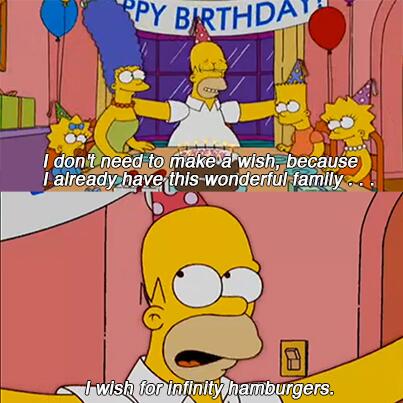
(our favorite clips, when Homer was going broke on the swear jar):

The sterile, white walls of the UCLA Medical Center beckoned me through her emergency room doors again recently.
Only this time, for once, I got to see the behemoth vertically, with a peripheral view.
Normally, it’s the horizontal perspective of fluorescent lights you enjoy from the gurney. But I was there with friends who had to visit the new ER, a gleaming, $ zillion wonder of byzantine architecture. Infinite PR has heralded the state-of-the-art campus, which features valet parking and customer satisfaction surveys.
But, as Maude says, aesthetic appreciation always takes a little time. So I can’t really give an honest report, having relied on it for so long. There’s a conflict of interest. I will say, however: The lighting is terrific.
And in observing the place instead of puking on it, I came to a couple realizations that I probably knew in the back of my mind. But this time, they could not help but find their way front.
The first: You should be able to opt out of jury service, but only if you agree to spend that time in an emergency room. It would not only give people an option to not bathe in legal molasses; this community service would actually improve the community.
How could it not, to watch a parade of real life? I will concede this to fate: It is brutal, merciless and often unfair. But it’s impartial. The destitute and the destined alike arrive through same doors, face the same gray horizon. Spend some quality time there, and we may even be less inclined to lament our lives as a living hell. Though I try not to be pollyanic.
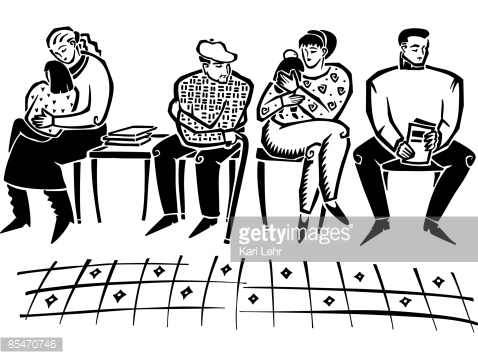
The second: When a family is convicted of Illness, the defendant is often less harshly punished than the witnesses.
You realize it in the faces of families awaiting health news. When you’re the one sick, your one job is simple: feel better.
When you are among the Concerned, you can face a much tougher sentence. To make someone else feel hopeful; to be a support beam and not a crutch; to not cry in the middle of random conversations. Or, worse still, to attempt the impossible: Accepting you have so little say in the life you brought into this world.
Yet, look closely, and you can make out real beauty, too. A mother who thinks nothing of a 10-hour admission wait; A father willing to challenge armed men to get a child due attention. The strength of conviction.
As I said, I’m no more an expert on architecture than I am in Spanish, or cooking, or household repair, or anything else that’s actually useful in real life.
But there’s no denying the building lighting really is terrific. Especially when it illuminates the world inside the building.
 The Hollywood Bowles