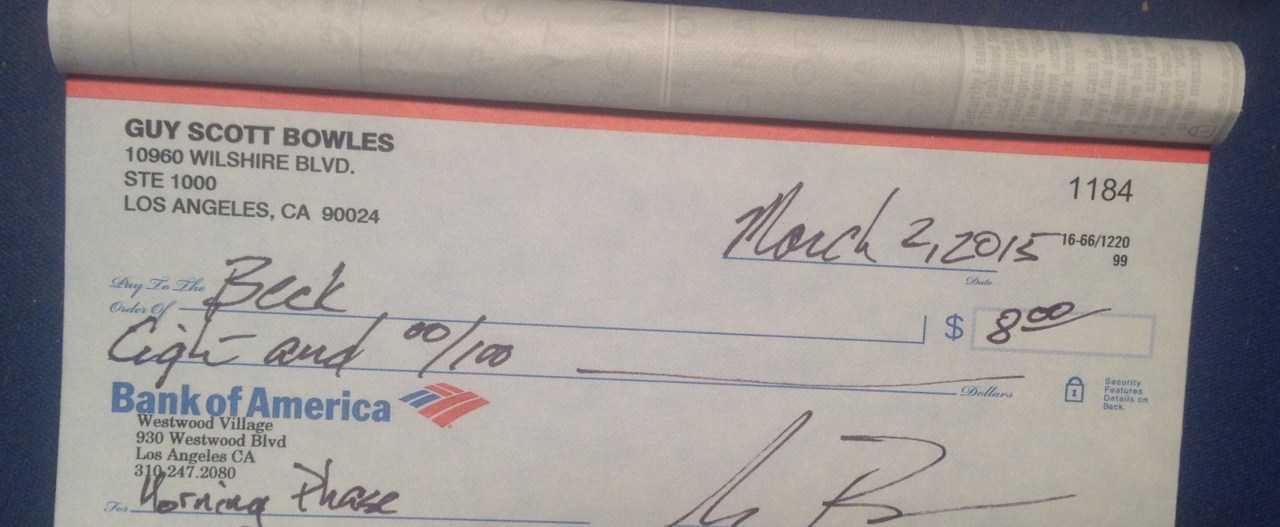
Morning Phase is terrific. Thanks for making it! I enjoyed pirating it.
I debated doing this. I had heard the same, stern lecture from labels, the law and lack-wit fans who told of taking food off the table of artists who live off shekels they make playing notes for a living.
Then I saw This Is War, a documentary that’s supposed to be about the contract dispute between the Jared Ledo-led Thirty Seconds to Mars and EMI. But it really is a stunning examination of the record industry, which routinely signs artists who sell, literally, million of records and relinquishes, literally, not a cent to its artists.
More important than the latent corruption, however, were the larger x-ray results of a cell structure that’s become the music industry. They show an organism that has apparently grown an ass where its head should be. And vice versa.
Please find the enclosed check for $8. ITunes is charging $7.99, which seems awfully cheap. But if the largest company and the third-largest record label in America says that’s what it takes to turn a profit, who am I to question?
But I’ll send it to you, since you actually created the work. Feel free to divvy as you see fit between fellow musicians, back up singers, recording techs, crew — and of course, producers and labels. You may enjoy doing their math.
One, it forces you to grapple with life’s inequities and mysteries, to face the unseen-yet-apparent, to reveal how you view the world and, more importantly, how you’d right it.
Two, you never know.
Hence:
Bring back the following words, in the following context: “swell,” as in ‘That’s great,’ not as in ‘That’s enlarged;’ “sore,” as in ‘I’m sore at you,’ not, ‘I’m sore from you;’ “hoosegow” in place of jail — or anything. (it’s just a kick-ass word.)
Officially declare three a magic number.
Invent and make mandatory the front goddamned brake light: Why is it the only angle you can’t see whether a car is slowing down is when it’s coming straight at you?
Atheists: admit it’s a faith.
Faith: admit it’s not science.
Science: make pets outlive us.
Add the Prius to the list of douchebag cars, joining BMW’s, Range Rovers and the Hummer H3.
Ban seatbelt laws. Americans have the right to be stupid.
Change the national anthem to ‘America the Beautiful.’
Stop using “impact” as a verb; it’s not.
Adjust daylight savings time so regular people care: “jump back” at 6 a.m. on a workday and “jump forward” at 4 p.m. on a workday.
Redefine rich. If a) You can buy anything on a restaurant menu or b) You believed you could be anything as a kid; you’re rich.
For every demand that’s not met, a hostage gets it. Beginning with “impact.”
In the meantime, I claim the following words, just because I don’t want them prostituted by the vernacular
Technically, this story contains spoilers to a show some unfortunate souls have yet to see. If so, read no further. However, in this Twiteration, any plot point not revealed 30 minutes after a show airs constitutes less a ‘spoiler’ than an ‘archaeological find.’
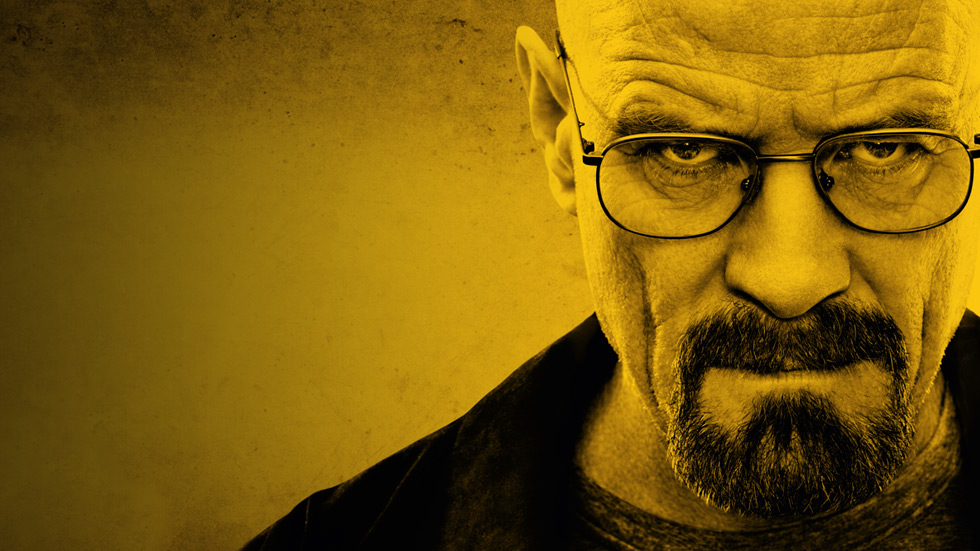
First, a firm and earnest caveat: I am perhaps the planet’s most ardent fan of Breaking Bad, and it remains my favorite show of all time (though Mad Men, considering its subject matter, may be the greatest). So I realize this is blue meth heresy.
But the fifth and final season pales in comparison to the first four, and, however slightly, tarnishes the show’s legacy.
That’s not to say the fifth season wasn’t awash in genius. Todd and “Ozymandias” should take their rightful place as two brilliant offspring of their (crystal) Glass parents. “Ozymandias” may be the most tense, melancholy and heartbreaking 42 minutes of television.
But consider the first four seasons as a whole: It was unique in that it a) Turned middle class rage inside out and b) Paid attention to the grisly, pesky details of death.
Walt was the ultimate nerd anti-hero. And who was the show’s greatest villain? Fast food manager Gus. Our relatable hero? Jesse, a skinny junkie who sucks at math. It took three episodes (its first shows) to dispose of two bodies, blasphemy for a crime drama.
And remember: Vince Gilligan and writers weren’t sure whether the show would be picked up for a fifth season, so he wrote the fourth-season finale, “Face Off,” as a prospective show-ender.
And what an ending it was! Never has a book seen a more elaborate final chapter. Walt, ever the chemist, luring Gus into one more bump from the one dope he could not resist: vengeance. Gus and Tio’s final, wordless exchange. That Walt simply provided users the tools of their destruction (much like his meth to junkies) proved a perfect, explosive finish, as did the upbeat-yet-bittersweet postscript of the poisonous depths Walt was willing to plumb.
But overdue popularity made a fifth season (and its drawn-out cash-in over two years) inevitable.
And let’s be honest: The fifth season didn’t match the previous in subtle decadence.
For one, the fifth season finale is terribly derivative of the fourth: Jesse, imprisoned in a lab, forced to cook for evil dealers while an armed Walt with uncertain motives arrives for the showdown.
The fifth-season nemeses, as well, lacked that unexpected villainy. Aside from Todd and Lydia, our evil-doers are white supremacists with prison records and swastikas tattooed on their necks. Not hard to hate — or spot, in a run-of-the-mill crime story. Our fifth season cliffhanger is a dying killer on the lam with nothing left to lose. It can turn out only one way.
And to have Walt’s cancer return was a misstep. It made his death a certainty and his life a waste. Walt needed to die from the life he’d chosen (even if it’s by Jesse’s or Skyler’s hand), not from the genes he inherited. His dramatic turn on Jesse, from protector to predator, strayed the what were always the show’s true addictions: Jesse’s need for a father fix; Walt’s high from dealing it.
Of course, this is to critique a Monet. That the show invited such fine-toothing, debate and dispute is to testify to its greatness.
And yes, I still know your name. You’re that high school chemistry teacher. The one with the doting-but-watchful pregnant wife and the high school son with Cerebral palsy that you’re desperately trying to still impress.
I don’t usually. It’s ugly. Business is what we substitute for living in the animal kingdom, where most residents meet their fates by being eaten. So, too, in business. The race to the swift. The weak are devoured by the strong. Mercy is not in the equation.
Except when Michael was involved. He had a way of humanizing everything. Even Blockbuster Video.
That’s where he worked, most of his adult life. Loved the movies, loved the free rentals he got. Even when I invited him to live with me in DC, get a fresh start, that’s where he took his first job. When I was out of town one weekend and had him watch the house, he had mercy on a woman who walked into the store, claiming she was being followed and fearing for her life.
Michael invited her over to sleep on his couch. When he discovered she was a derelict, he gave her what money he had, and gently evicted her before my return. I was initially angry, but it turned out to be harmless. Humorous, even; the woman was so touch by Michael’s kindness she would routinely bring him food from the soup kitchen. Beets, kidney beans, shit no one wants. But she would pack them up, leave them on our front step.
“MICHAEL!!!!” we’d hear her yell from the porch. “GOT SOME FOOD FOR YA!!!!!”
We laughed often about Blockbuster. Once, I went in to register membership at my local store. My first is technically Guy, which is how I fill out all paperwork. But, apparently, the Mensa member logging my membership thought it was Gary. So he misspelled that name. Then my last.
Then, over the loudspeaker, I’m alerted.
“Gray Bowels,” the guy said. “Do we have a Gray Bowels here? Your membership is ready.”
You could have shone a spotlight on me as I walked through the snickering crowd, which must have had pity on the poor guy named after unhealthy excrement.
Or the my cotton candy craving. I was jonesing for it one weekend, and discovered that one store in L.A. — Blockbuster — carried cotton candy. No doubt aged, congealed and putrified for mass consumption. But it bore a resemblance. Then I became a junkie.
Every Friday night, with a couple rentals, a bag of “Fluffy’s.”
“Boy, you sure do like cotton candy,” said the guy, whose pimples were a teenage connect the dots. “You get it every week.”
“I know,” I said, staring at the road map. “But where else are you going to find cotton candy?
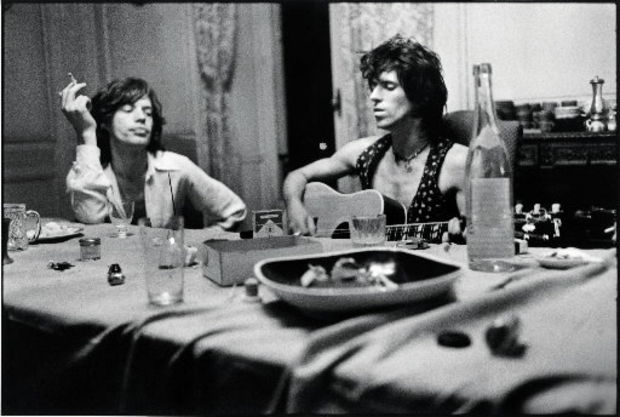
Of all the romance languages, can anything touch music’s resonance? It’s weird familiarity and otherworld-liness?
What is it, if not a language? One that resides somewhere in all of us, usually as receptor, but sometimes as that rare transmitter.
And my god! the brilliance of those who can speak it. Even the burnouts and dummies. You’ve seen them. Dumb as rocks, handsome as bank thieves and driven by something that’s beautiful, primal.
“So you run and you run to catch up with the sun but it’s sinking Racing around to come up behind you again. The sun is the same in a relative way but you’re older, Shorter of breath and one day closer to death.”
— Time, Pink Floyd, Dark Side of the Moon
Roger Waters was 26 years old when he wrote that. But how is that? How does a kid in his mid-20’s, rich, young and famous, have any inkling that deep — about time, no less. And he hardly stands alone. The British Invasion came on the shoulders of neophytes who somehow already knew to be mad at a world they didn’t yet know was maddening.
Yet that’s the genius of the language of rock (and, perhaps, bands): For some reason, that genre peaks in the young.
That’s not true for any other art forms. Da Vinci was 50 when he painted the Mona Lisa. Hemingway, 40 when he wrote For Whom the Bell Tolls. Artists tend to progress as age wizens our senses, widens our peripheral view.
But name one rock star (no less a band) that’s as good now as five years ago.
It used to madden me, why that was. Then I saw this, which puzzled me even more:
If that’s not one for the archeologists and paleontologists of future eons, I don’t know what will be. That this baby — who can know nothing of lyrics, meaning, fame, celebrity or the difference between Perrier and puddle water — can move, muscles in concert, as miniature maestro as a pop song upticks in tempo means something. It has to.
Mom used to tell the story of me as toddler when I heard the Frank Sinatra song “It Was a Very Good Year,” a song that got me so sad when I heard it I would eventually stop what I was doing to lay my head in mom’s lap. I never really believed it; it was written in 1961, four years before I was born. and I could barely balance, let alone decipher lyrics.
Yet I never forgot that story, and dedicated a playlist, “Break My Heart,” to that story. The playlist contains only songs that, if I sit long enough and listen to the lyrics, will make me cry.
I have dozens of playlists from more than 6,000 songs that soundtrack my life, that follow me from shower to car to bed and to shower again. The “Fuck You Motherfucker” is for songs that let me vent. “Shut Up And Listen” are instrumentals for writing. “Long Gone Daddy” are for soured relationships and road trips.
But it was always Frankie and Break My Heart that puzzled me most. I’ve come to love the depth music can take me, even the dark places. What other poetry takes you there? (Though there is one song, Colin Hay’s “I Just Don’t Think I’ll Ever Get Over You” that I dare not put on the playlist for fear of hearing its haunting truths too often). How many book passages can we quote? How many lines of poetry?
Now count how many albums.
But I may have lucked upon an answer, one at least that will stop this brain from imminently frying. I saw a documentary that passingly mentioned that the human auditory system is completely developed in the human fetus at 20 months.
Eureka! For four months, we have been listening to the world around us, aware that we are part of a choir, though we don’t yet know the chorus. But we still sing. Somehow, we know how this riff goes. It’s more than a catchy beat, a rousing crescendo, a stunning vibrato. It’s more than that. It’s something true.
The question, O me! so sad, recurring—What good amid these, O me, O life?
Answer.
That you are here, that life exists, and identity, That the powerful play goes on, and you may contribute a verse.
— Walt Whitman, Leaves of Grass
“Am I doing the right thing?”
Not before, nor since, have I asked that question aloud, posed 15 years ago today.
My organs were in. I was flying from New York, on the tick tock clock, for my double transplant. The doctors prepped me: gown and gurney, hair net and thin blanket. Shivering, cold as hell. Now all that awaited were the new kidney and pancreas down the hall.
I had been waiting more than year for this moment. A perfect genetic match. A chance. Yet I wasn’t sure that moment. Spencer and Michael had offered their kidneys. My god. Their kidneys. I never told them, but I got two calls that my donor pancreas was in. Tick tock. That we could move forward as soon as a volunteer was ready to be cut.
Twice I told them no. I told them I wanted to wait for the exact genetic match, for both organs, simultaneously. In truth, I was afraid. What if it didn’t work? What if I died on the table? What if Spencer or MIchael died? All because I was unable to deal with my demons?
I was a shitty diabetic. I chose to run from the disease I contracted when I was 14. I barely paid notice to my blood level unless it sank perilously low or soared dangerously high. I chewed sugared gum to fit in with the kids at the basketball court behind Pierce Middle School. They hit up the Good Humor truck every lunch period. I didn’t want to be that one kid who couldn’t chew goddamned bubblegum. I convinced myself that I was like any other kid, that nothing like juvenile diabetes, a disease I’d heard of until I got it, could conquer Ultraman.
Now I’m on the gurney, forced to face the cost of my flight.
“Am I doing the right thing?” I asked my ex-wife, Julie. In all my hubris, I needed reassurance.
“I don’t know,” she said. “But if you want to call this off, we can leave here right now.”
Now, I know. It is the right thing. Better to die on the table than of diabetes’ decay, I said, feigning bravery. The real reason I was ready: Finally, after so much running, I realized I did not face this alone. Over the years, I’ve discovered, that’s the key to facing what appears so frightening, so insurmountable, so entrenched within. That there’s another option besides facing your demons, or not.
You can hunt them. Corner them. Force them into the light and make those motherfucker pay before you finish them off.
If you are afraid of love, love. If you fear faith, believe. If you are frightened of the dark, get up in the middle of night. Don’t turn on the light. Walk to the center of the room, the center of the dark, and challenge the spirits to show themselves, to take their best goddamn shot.
They won’t. That’s the thing about inner demons. They are crafty, malleable, terrific at making you believe they are actual. Undefeated on the field, they will say, and you are but grass to be mowed.
But that’s a lie. They are cowards.
I was a crime writer the first half of my professional career, and saw real monsters. Michael’s brain tumor. Ronald Gene Simmons, who killed 14 relatives over Christmas because he snooped a note that his wife was tired of the abuse and was going to leave for good. Those are monsters materialized. I cried when one took Michael, sighed relief to see the other executed.
Yet how often do we face such demons? How often do we instead convince ourselves that they’ve become so fierce that we’re not up to repelling them? That we…just…can’t.
We can. It is within us, because we created that darkness. Perhaps let it grow out of control until it appeared in control.
However.
Is this not of our own creation? Is it really that impossible to smite that enemy, god-like and vengeful? The bible loves to preach of demons and gods borne outside our world. Adam and Eve were fine until that nasty serpent pulled up in the fruit cart.
Fuck that. Maybe Adam was just jonesing for some fructose. Maybe if he’d faced his own demons instead of blaming one in a tree, we wouldn’t have ever had to say goodbye to Samuel Flegel. Instead, he rests inside me. I carry him, perhaps because of my own demons.
But, on this day every year, he taps me on the shoulder. He is a gentle but literal reminder. I do not walk among the night spirits alone. That he is here, bow at the ready. That my quiver is full, filled with arrows sharpened by Spencer and Michael and those who were always less fearful than I.
I’ve never been big on ceremony, traditions and resolutions that kick off on a calendar date (though I am considering three New Year’s Resolutions: to take up smoking, gain a little weight and exercise absolute authority at the expense of others; it just takes willpower). But I’ve discovered one of my own.
On Christmas Day, I give a $20 bill to the first homeless person I find. Usually it’s in front of the 7-11, though I’m finding the Circle K to be a bigger catch basin of the city’s human jetsam.
It started out of guilt. I was buying a Big Gulp with a $20 several years ago outside the 7-11 in Westwood. It was particularly cold (at least for California — I’ve become so wussified I don’t know cold anymore), and a homeless guy asked if I had change. I had a ton. I told him I had none.
When I got back to the car, I reached in my jacket pocket and fumbled through all the change and bills as I felt for the keys. Heard the wrong song when I turned on the car — April Comes She Will — and decided to give him all the change in my jacket. When I reached him, I decided everything in my jacket. He was so surprised he shook my hand with both hands, a gesture I’ll never forget. The only Christmas embrace that day, and one initialed on the wet cement of of my brain.
So every year, there is that. Never again the reaction I had that day. Once the guy just nodded, no thanks. But it makes me feel the day. And what’s more important than recognizing the day, than feeling it?
It was reinforced a couple years ago, when I had to walk home from getting my motorcycle fixed, a mile away. I didn’t want to haul the helmet and heavy jacket, so I piled them into an abandoned shopping cart left on Sherman Way, and began the trek home.
Despite holding at least $600 worth of motorcycle gear in my cart and an iPhone in my hand, no one on the walk home looked me in the eye. One neighbor stood on his porch til I passed to cross the sidewalk and get his mail. A young couple walked on the lawn instead of passing on the same pavement strip. Not one nod. Not one look in the eye. And I realized: maybe poverty has nothing to do with items. It has to do with acknowledgement. Am I ever so poor, afraid or simply circling our own orbit we are not flush with that, holiday or no?
So yes, I guess I am one for tradition, though I’ve had it recognized by several friends as a likely flush of cash. You know, they say, that money is going straight to the liquor store.
They are all probably right. To which I say, to them and all the Secret Santas I can look in the eye:
There has been so much braying among conservatives over the proclaimed takeover of government (led by Walrus-In-Chief Rush; seriously, I wish net wizards would do a side-by-side with him and Mr. Ed. If they did, they’d see that they whinny with the same muscular jerks. Of course, the horse pales to the human’s sarcastic skills, though the human lacks Ed’s logic, humor, or the intuitive sense not to shit himself of camera.) that you’d actually think Republicans won.
But The Republican Party is no longer, unless you consider The Tea Party. Let’s not.
Let’s look instead at the GOP freshman who came to office in record numbers, at least for Republicans: women and minorities. Nowhere in the debates were there discussions of gay rights or gender equality laws. That wasn’t the case just a generation ago.
The Republicans have adopted the big-tent strategy of the Democrats. And while it’s fair to question the GOP’s big-tent approach, the fact is a big-tent is a pretty nice place to be. When are we harmed by being more inclusive? Lincoln saw this.
But in the larger picture, history favors the liberal. We once believed the universe revolved around our pebble, and burned those who thought different. We considered (not that long ago) some men 3/5 of another, and women less than that.
Today, we consider those notions prehistoric. Just as we are beginning to view the right of, say, gay marriage. States will hold out simply to be difficult, but they will eventually cede to the fact that we are all related. That they’re no threat, the differences. As embarrassing our lapses, we have still somehow learned there’s less to fear than we thought. Goddamn, you’ll be able to buy weed in a vending machine soon.
So let Rush poop himself. Someone has to play violin on the Titanic.
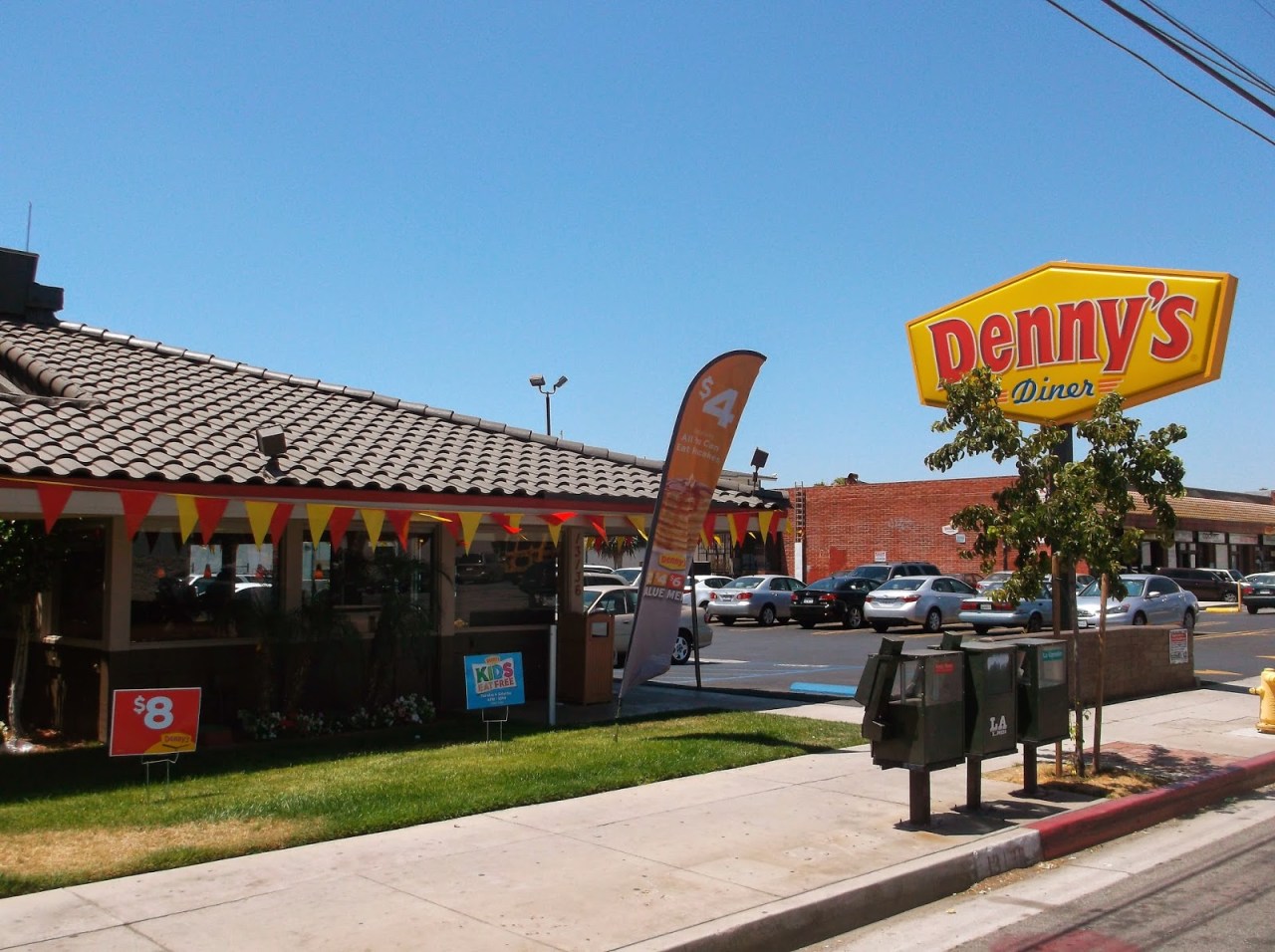
Mom and sis went to lunch recently at the Denny’s in Van Nuys, chic dining for this family.
As mom and Caroline took their table, mom noticed a bald man in his mid-40’s enter with a group of other men. The man apparently stared intently at Caroline as they walked to their table. Mom was a little miffed at the rudeness.
As the women ate, mom noticed the man was still staring at Caroline “to the point of rudeness,” mom recalls. It doesn’t take much for mom to express herself, and she shot stares back with a “don’t you ogle my daughter” sternness.
Finally, the man stands up, walks to the Bowles table.
“How is the food?” the man said. “Do you need anything?”
Mom was less pissed; perhaps he was a manager, waiting to go on duty.
“No, we’re fine,” Caroline responded automatically, though pausing slightly because she thought she recognized the guy. “Thank you.”
The man smiled, turned and began to walk away.
Never one to bite her tongue, mom said to Caroline, “I could have used an extra napkin.”
Caroline immediately looked over her shoulder, raised an arm and told the man, “Mom needs an extra napkin.”
The man walks to one of the waiters, says “I got this, Sam,” takes a napkin from his tray and returns to the table.
“Here you go, mom,” Howie Mandell said before walking back to his table.
As Mandell is an avowed germophobe, mom assumed the napkin was clean.
The brutal irony of science is that, in discovering how to measure matter, it discovered that nothing does.
Where once science argued the Big Bang theory, now we have the Multiple Universe debate, which posits that we are more granular than we ever thought. That our macrocosm, the cosmos we once saw as infinite, is actually just a contact lens in a sea of multiple infinities. It’s enough to leave you scrambling for a blankie, pacifier and bottle of Jack to forget our insignificance.
But we can’t help but add humanity to our search for worlds without it. For what is atheism, if not faith? We side with science because it has a better track record; you know what? Turns out the world isn’t flat. The sun doesn’t revolve around our planet. Human sacrifice won’t bring rain. Our bad.
Religion, on the other hand, prefers to retrofit theories to explain an ever-emperical world. Hell yes dinosaurs roamed our neighborhood only a few millennia ago; God just has his own daylight savings plan and time zone; He’ll explain when you get there.
But when we hear Stephen Hawking explain so convincingly the workings of the cosmos — that time had an official beginning like an Olympic starter pistol, that everything sprang from nothing, that there really are bottomless pits (we just call them black holes) — we must take it with the faith of a Pentecostal. How is the Big Bang on a scale any less miraculous than the loaves and fishes? Science is great at explaining the laws of nature. But whence the lawmaker? Give this to faith: It can be a lot less depressing than quantum physics.
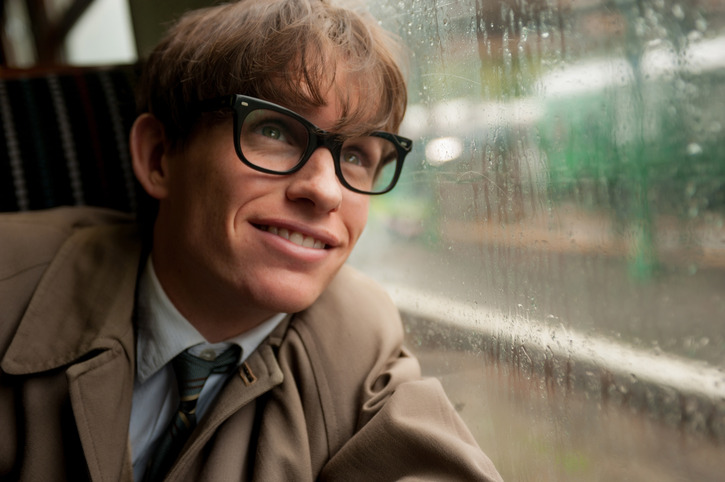
Perhaps the answer lies not in Hawking’s mind, but his body, which continues to fade like a collapsing star. The macro from the micro, as when a split atom alters so many molecules. Hawking embodies our own conflict with existence. He should have been dead 50 years ago, but still fights the darkness that consumes his life. He has elevated us without movement, illuminated galaxies from a wheelchair and serenaded our choir with a gospel chanted through a Speak n’ Spell.
Maybe he has inadvertently stumbled on the singularity that unites both sides of the pew.
That life, no matter how you define it, finds a way.



 The Hollywood Bowles