The Hollywood Bowles

Those who can't write, edit. Those who can't edit, blog. Operating at a loss since 2014.

Paul Thomas Anderson is to the San Fernando Valley what Woody Allen is to Manhattan — without the creepiness.

Sure, Quentin Tarantino grew up here. Chinatown is here. And Hollywood has one address.

But Anderson represents the sprawling, tacky heart of the Valley. Half Stanley Kubrick, half strip shopping mall, Anderson is the avatar for the 21st Century California filmmaker. And ‘Licorice Pizza’ the 21st Century California movie, tye-dyed in nostalgia for an era that may or may not have existed. But its appeal undeniably did.

In a way, ‘Pizza’ is the embodiment of nostalgia without sentiment, capturing a time and place in the 1970s when Nixon was on TV, Vin Scully called Dodger games on radio, gas lines formed because of shortages, and a boss could brazenly slap the behind of his female employee without fear of repercussions.

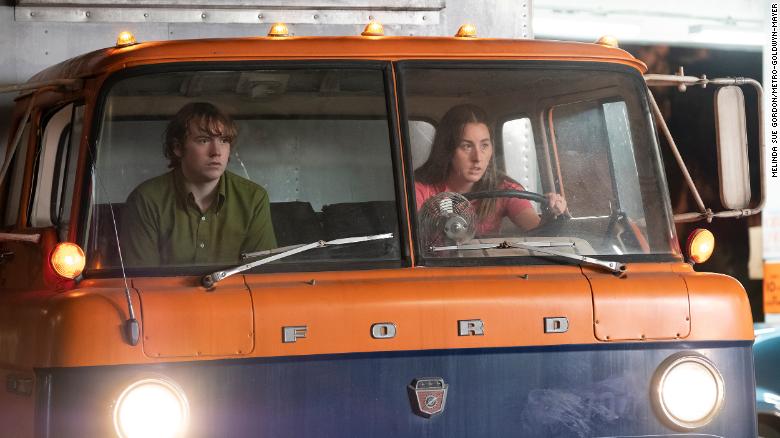
At its core, the movie is a peculiar love story, one involving Gary (Cooper Hoffman, the son of the late Philip Seymour Hoffman), who’s about to turn 16, and the older Alana (Alana Haim, of the rock band), who finds direction in an otherwise unfocused life thanks to Gary’s get-rich-quick schemes, which include peddling water beds.

A few actual ’70s characters find their way into the pair’s Hollywood-heavy plot, with Bradley Cooper portraying producer Jon Peters as a wildly flamboyant lunatic who actually purchases one of the beds. Sean Penn also turns up as an actor (the name is changed, but only slightly) full of strange stories, although it’s not entirely clear that he can separate reality from his movies.

‘Licorice Pizza’ really doesn’t have much of a plot; instead its a ‘Dazed and Confused’ style series of loosely connected episodes, in a way that becomes more obvious during the second half. Nor does it really address some of the nagging questions about Alana, whose periodic tantrums are among the film’s only poorly written scenes.

Those disclaimers aside, for the most part Anderson (who has directed a number of Haim videos since his last film, “Phantom Thread”) has delivered another highly entertaining movie, capturing a very particular time but also the enduring and universal nature of relationships developing in the most unexpected ways.

The title, incidentally, comes from a chain of record stores that were popular in the ’70s but no longer exist — a fitting symbol of the desire to give this bygone era another spin.

Anderson, the director of ‘Boogie Nights’ and ‘There Will Be Blood,’ has made perhaps his most sentimental film yet. More importantly, ‘Licorice Pizza’ is a movie Hollywood desperately sought mid-pandemic: one with heart.
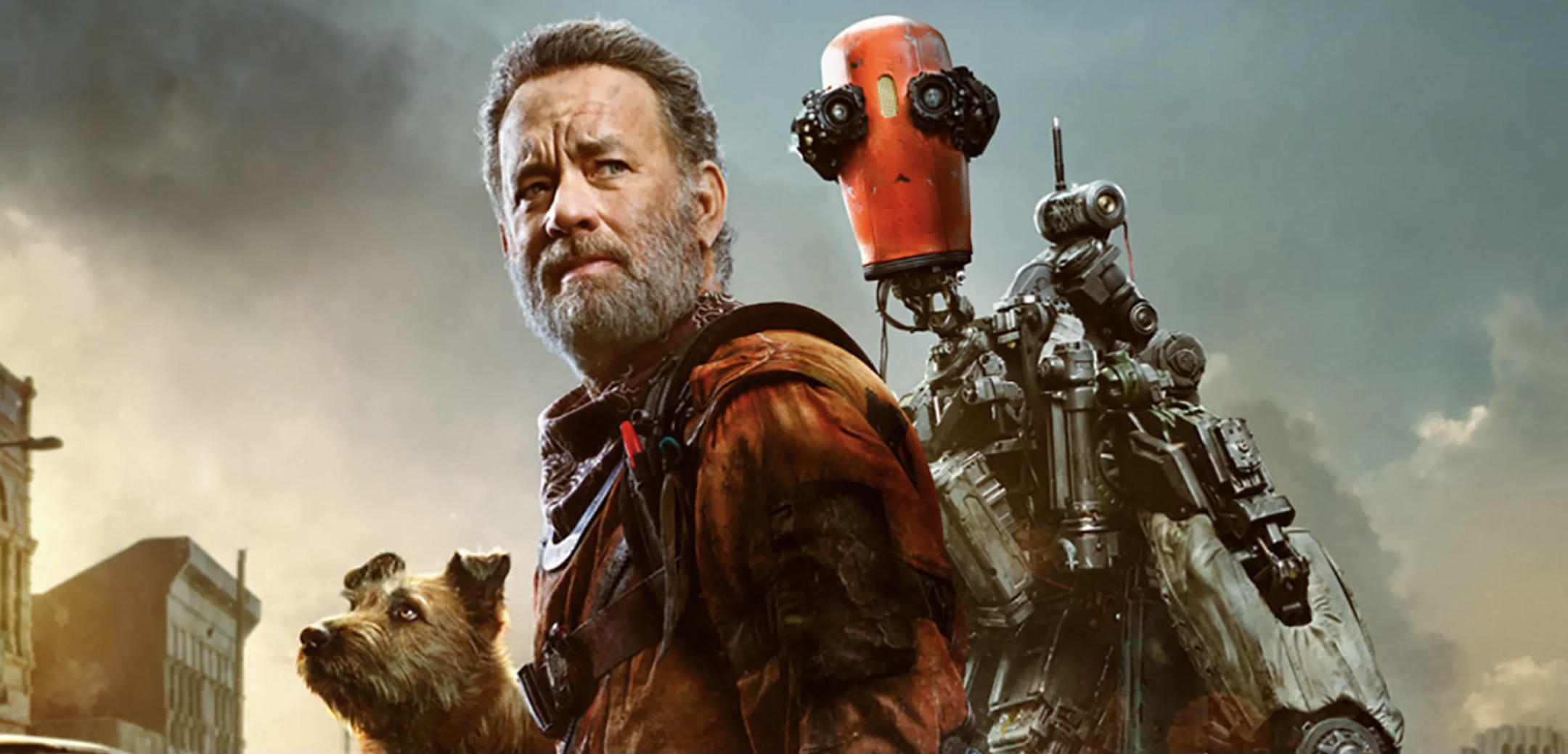

Finch wants desperately to be a good boy.

It learned all the movies it wanted to be. Rain Man; 2001: A Space Odyssey; E.T. The Extra-Terrestrial. It had a beloved breed in Tom Hanks, who established his canine flick bonafides with Turner and Hooch. He won a couple Oscars, too.

But Finch ultimately is a good argument for why the MPAA needs its ratings system fixed. Because while it is rated PG-13, Finch is not a movie for audiences 13 and older. I’d say 16 and under.

How else to describe Apple’s latest film? It feels like Castaway met Wall-E and they went off to raise My Dog Skip — without the originality of any. Finch decaffeinates and sanitizes so many crucial scenes you’d think Disney made it (right down to physical comedy that’s just plain Goofy).

Hanks reprises the deserted-island role he made so memorable in Castaway. This time, the universe wants his character dead by solar flare, which has already wiped out most of the planet. Rightfully concerned that his irradiated days are numbered, Finch builds a robot to care for his dog.

While those plot details might be trickled out in an adult drama. Finch vomits forth those irresistible plot points almost by the first half hour. From poster to trailer to opening scene, Finch wears its cliches proudly and telegraphs its messages as clearly as Morse, which is almost a charm in itself.

Because there’s no hating Finch. I wept during it, but almost furiously so: It’s like a rescue shelter commercial set to Sarah McLachlan: Either don’t watch or get a tissue, because your heartstrings are going to be mercilessly plucked.

And it’s hard not to watch anything Tom Hanks does, even when it’s just him, a CGI robot and a rescue dog named Seamus, a terrier mix who looks a lot like my rescue mix. I was ready to love Finch. I wanted to love Finch.

But then Finch started misbehaving. For starters, Seamus plays a dog named Goodyear. Goodyear? The film gives some contrivance for Goodyear’s name, but come on: At least know a good dog name. You know, one that a dog would recognize and wouldn’t sound like product placement. Say, Seamus.

And for the robot, Jeff (again, ??). The movie quickly establishes that Jeff has only 72% of the information about the world that our hero, Finch (Hanks), meant to upload. A sudden dust and radiation storm cut the upload short, propelling our band into a wacky road trip.

There are many details to follow in the movie, but it’s all downhill from premise.

Or maybe not. Perhaps Apple, Disney and all major studios trying to stay in business view movies not for their teenager-and-older subject matter, but for their teenage-and-older consumer matter.

Because the movie ratings system is a grim numbers game, as the Motion Picture Association of America has confused its ratings as a seal of approval from the film industry — or a specific movie.

Your movie have smoking in it? PG rating. More than two “fucks?” You got yourself an R rating, buster. Showing pubis, or, worse, showing it in a sexual context? You’re flirting with an X rating — a death rating outside a particular demographic.

So why don’t we in the media get out of that absurd system? Can we not tell audiences who the movie is for, in terms of subject matter, instead of using Hollywood’s definition of age-appropriate viewing, which is a consumer-based metric?

Because Finch is a fine family film, full of fine lessons about friendship, family and the meaning of consciousness.

I just expected it in an adult film.


Spoiler alerts have become to movies what the Surgeon General’s warning became to smoking: a perfunctory caution before ill-advised behavior.

Remember plot twists in movies? The stunning revelations in films such as Psycho, The Crying Game and The Sixth Sense? Good times.

And getting rarer. When was the last time you were surprised by a movie’s plot?

Studios are trying to maintain the mystery: In the ad frenzy promoting Daniel Craig’s final film as James Bond, No Time To Die, trailers exclaimed (and still do) “You won’t believe the ending!”

Perhaps. Unless you read the Wikipedia entry for the movie. It spelled out the ending in detail — on the movie’s opening weekend.

This is the new rule, not the exception, in Hollywood’s click-bait reality. Movie reviews and plot secrets air on social media the day a movie opens, if not before. Some YouTube movie critiques are ad-libbed on cell phones outside the theater that just aired the film.

And it’s not only the ending. The Eternals, Disney’s latest comic-book entry, led all moves this weekend with a respectable $70 million in the U.S. — only in theaters.

But for those who enjoy Marvel’s trademark end-credits for their cameos and plot clues, bad news: Wikipedia listed that as well. Twice, actually: Eternals had a mid-end-credit scene, too. Both were duly described.

This poses a conundrum for an industry that must tease a film without giving away away too much. Studios are already laboring to sell kids on the theatrical experience itself, no small task in a pandemic. That job becomes tougher without intrigue.

So what fate, the movie twist? Already, fans are calling on fellow cinephiles to be more discreet.

Studios are asking reviewers sign agreements that they will not write on social media about a movie before their reviews. And more film reviews and analyses can be found on YouTube with a “NO SPOILERS” guarantee.

But for now, it’s up to the viewer to provide the suspension of disbelief. And surprise

Boxing Cassius Clay is gagged with a piece of tape and a padlock News Photo  - Getty Images

Damn Ken Burns. He ruins everything for me.

First it was TV. His visual opuses — Hemingway, Vietnam, The Civil War — put other television shows to shame, including my favorites: Breaking Bad, Mad Men, The Wire, The Simpsons.

NOW he’s ruined storytelling for me. His latest non-fiction tale, Ali, ranks among my favorites. I was already a sports nut, so there was no chance I would not like the PBS series.

But what caught me flush on the jaw was his undercutting of my assumptions about not only the man, but what I believed to be true about Malcolm X, my career of choice and, more importantly, my father’s.

Ali is Burns at his poetic peak. Throughout his career, Burns has managed to affect the cadence and mannerisms of every American milieu he’s portrayed. Hemingway had the sparseness of the author; The Civil War seemed to live on sepia parchment, like the letters of long-gone soldiers; you could almost taste the horse nipple of a stadium hot dog in Baseball.

In Ali, we are ringside and blood-spattered at Muhammad Ali’s greatest bouts. Set to a pulsating house beat, Ali sets up the Kentucky boxer’s most important battles, in and out of the ring. And because Burns is, at heart, a gumshoe reporter, he invariably finds details overlooked or ignored by history. Ali even makes the outcome of fights decided decades ago feel uncertain, a masterstroke of any sports documentarian.

But Burns goes deeper, sparring with the subject matter. Like Ali the fighter, Burns the storyteller rope-a-dopes viewers, luring them into looking at one thing while — Pow! — stinging with a jab that clears whatever preconceived notions were in your head.

In this case, that would include haymaker epiphanies about Malcolm X, The Nation of Islam, and the media of my father’s era, all of which combined to turn Ali into a social pariah. Burns exposes not only the Sweet Science, but the mad scientists who were determined to turn a flawed man into flawless hero — or fatally flawed villain.

Among the mini-documentaries to emerge from Ali, no subject stands as tall as Malcolm X. Burns reveals that Malcolm X was such good friends with Ali that after the boxer claimed his first heavyweight title, he changed his name to Cassius X, enraging Elijah Muhammad, the leader of The Nation of Islam. Malcolm’s newsreel interviews reveal a principled, thoughtful soldier of faith troubled by his brothers’ descent into greed and ego. Malcolm would be exiled from the Nation of Islam by Elijah, who “granted” Cassius Clay the name Muhammad Ali, and be gunned down in an assassination he foretold.

I always thought Ali was a shameless braggart who chose his own name. The reason I thought that was because my father thought that.

Burns makes quick work of Elijah Muhammad, a spiritual leader with a Koresh-ian fondness for power and adoration. His rise to power in The Nation of Islam — fueled by Elijah’s publishing prowess — is a Shakespearean fall that the director illuminates effortlessly.

The four-part series is rife with revelations: Malcolm was a man of peace; Eliah a man of corrupted ego. That sportswriters, not the athlete, dictated Ali’s narrative (a narrative personally handed down by my father, a news reporter as snookered as I by hometown sports writers beguiled by the reputation of the sport, not the realities).

The series, like the man, sputters in the second half. We are familiar enough with Ali’s fall from grace that the series would have better fit a three-act Greek tragedy, which Ali ultimately was. The boxer was just Hamlet in boxing gloves: To be or not to be the greatest. Both caution the danger of myth meeting humanity.

Burns, of course, doesn’t give a damn about myths, reputations and legends. That makes him the king of storytellers, including those in film, music, TV and art.

In fact, an enterprising college should offer an American history course, as seen through the eyes of Ken Burns. Can you imagine a college class with educational TV as homework? Can you imagine the wait list? Just sayin.’

No offense to Muhammad, but he is the greatest.

I’m sorry. I have to say something.

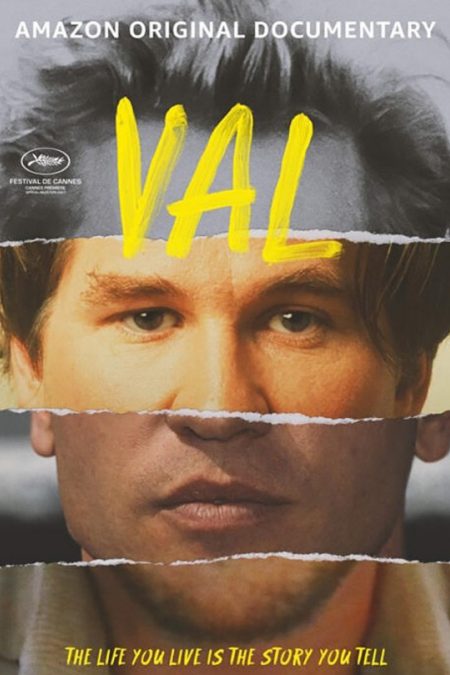
I had a problem with Val, and I have a problem with Val, the Amazon film that’s dazzling critics and has set social media a’swoon.

Complete with yearbook videos of Val Kilmer, Tom Cruise, Kevin Bacon and others from the dimpled heyday of a Dirty Dancing generation, Val charts the Shakespearean fall of a man who never lived a life more than an arm’s length from a videocamera. And that’s how Val feels: like a sad video with heart that can’t quite connect because the lens gets in the way.

Make no mistake: Val is courageous filmmaking. Any Hollywood project that underscores the humanity of an inhumane industry is worth noting. And seeing Kilmer squeeze synthesized words through a dime-size hole left gaping in his throat because of cancer is agonizing. Combine that with the actor’s admission that he’s been reduced to autograph-signing for a living, and his film is a bonafide heartbreaker.

But having an Incurable doesn’t make you a hero, or even brave. And Val seems too content to conflate illness with fortitude, disease with determination. In that sense, Val is guilty of a cardinal-sin-trope.

That is a common mistake in film, however, and I have learned to forgive it. My real problem with Val is my problem with Val. He is one of two actors in my career who I considered insufferably aloof.

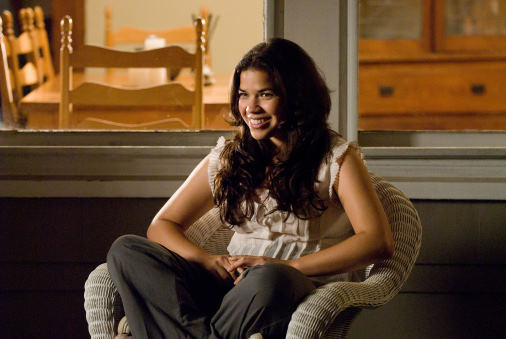
The first was America Ferrara, the Disney star who has become the poster child of princesshood. I was interviewing her for Sisterhood of the Traveling Pants, and she was backstage for some made-up award. While she fielded my questions, she never took her face off a mirror. She would play with a lock of hair, gazing adoringly while she gave pat answers. And I thought: She will not remember a moment of this.

America Ferrera

A similar realization struck when I interviewed Kilmer for the film Alexander. We met at a diner on Wilshire, just down from the Academy. I arrived early and took a booth by the window to see him arrive. He must have taken a back or side entrance, though, because he seemed to just appear — and walk past the booth. He did not look around; Kilmer was used to being recognized, not recognizing. I called him back to the booth, and tried to interview him.

I say try because it wasn’t really an interview. Like America, Kilmer spent the entire lunch gazing away. Unlike America, Kilmer wasn’t looking at his reflection. He was looking at a bus stop on the corner, as if he were watching a dog read a newspaper there; transfixed, bewildered, but not enough to warrant mentioning. I assumed he was high, drunk, or both. Either way, he was rote, automatic, and checked out for the interview.

Which is the failing of his autobiographical film. Kilmer has clearly gone through intense personal drama, from cancer to the jacuzzi drowning death of his 15-year-old other brother. Yet none of that grief and recovery seems to inform a film that is, ultimately, about loss. Val’s moral seems to be ‘Shit happens, so look good when it hits.’

And Val looks good. The movie makes clear: Kilmer went nowhere without a videocamera and an Action! worldview. An early adopter before that was even a term, Kilmer used a camera as electronic journal, taping actor buddies, ambushing directors with 60 Minutes-style confrontations and lamenting their shortcomings in video confessionals.

But his famous feuds with Cruise and Marlon Brando were unfilmed and almost unmentioned here, instead glossed in the movie with press junket pleasantries. There is no reflection on whether a James Dean lifestyle led to a James Dean darkness. No pondering whether smoking led to cancer. Not much pondering, period. Just ‘Love is the answer.’ And ‘Jesus saves.’

That’s a form of filmmaking honesty, I guess. But it’s a subjective, selective honesty.

Hollywood honesty.

Speaking of which, I wasn’t going to review Val because of the above personal interaction with him. And I acknowledge that feeling brushed off by him — and from anything real and personal — likely colored my impression of the man.

I just can’t get over feeling the same way about the film.

Get the podcast here!

Hollywood’s Epic Custody Battle

Will Black Widow Release In Theaters, On Disney+, Or On Digital? - The  Direct

Hollywood has always had a lucrative but loveless marriage to the nation’s movie theaters.

For decades, studios and exhibitors have maintained a tense but workable relationship. Sure there have been some knockdown-dragouts, and lamps have been thrown in arguments over things like the cost of a ticket and how long someone should wait before they can see a movie from home.

But things got serious over the weekend. And while mom and dad haven’t filed for divorce yet, it looks like they are getting separated. And the custody battle could change life as you knew it as a moviegoer.

Theater owners on Sunday blasted The Walt Disney Co. for making Marvel’s Black Widow available simultaneously in the home and on the big screen, saying the decision undercut the movie’s box office potential and promoted piracy. It marked rare public in-fighting for an industry that prides itself on private unity.

In a blistering press release from the National Association of Theater Owners (NATO), the trade organization accused Disney of handcuffing its own film by simultaneous streaming the film and releasing it in theaters, causing the movie to suffer a “stunning collapse in its second weekend in theatrical revenues.” NATO also noted that Widow dropped an unprecedented 41 percent from Friday to Saturday during its opening over the July 9-11 frame.

This is Hollywood eating its own. For years, studios and theater owners had a rough peace accord: a three-month delay between big-screen release and video availability.

But COVID destroyed that treaty. The pandemic forced industries to accomodate a populace sequestered at home, a disaster for companies in the spectating business like movies, theater and sports.

Disney and Warner Bros. have revamped their film slates to accommodate streaming releases, and studios such as Netflix and Amazon Video had already dampened box office revenue, which has remained relatively flat for 25 years.

In a sweeping indictment of all streaming studios, NATO accused Disney of using the virus as a ruse. “Despite assertions that this pandemic-era improvised release strategy was a success for Disney and the simultaneous release model, it demonstrates that an exclusive theatrical release means more revenue for all stakeholders in every cycle of the movie’s life,” NATO said.

This is one parent blaming the other for a child’s fatal disease, when in truth their union had been on the rocks for years.

Since 1995, Americans have bought 1.2 to 1.4 billion movie tickets a year. That’s roughly four movies a year, per American.

Whether that’s a healthy business model is up for debate. Whether it’s a stagnant one is not.

Widow‘s subdued ticket sales, coupled with steep second-weekend declines, suggest that moviegoing is far from returning to normal. And while Disney has not commented on NATO’s accusation, it did note that Widow’s box office has passed $324 million, including revenue from Disney+ Premier Access.

But even that is debatable, NATO claims. It argued that Widow‘s stand-alone box office debut was actually $92-$100 million, a rare swipe at studio veracity.

“One can assume the family-oriented Disney+ household is larger,” the release said. “How much? How much password sharing is there among Disney+ subscribers?”

Ouch.

The way back is unclear. The professional sports world seems to have brokered a rough balance between at-home and in-person spectating, though not without significant casualties (The 2021 Tokyo Olympics, for instance, will be fan-less.) There is money to be made.

So these are not necessarily irreconcilable differences. But, given the stark contrasts over what constitutes a true moviegoing experience, they are irrefutable.

When Arclight Cinemas and Pacific Theaters announced this week that they were shuttering 16 locations and more than 300 screens — including the venerable Cinerama Dome in Hollywood — you could nearly hear the city deflate like a punctured balloon.

The news was met with a collective gasp and sob that Los Angeles hasn’t felt since Kobe’s death, and filmmakers and fans alike took to social media to pay respects, swap memories and brainstorm ideas to rescue the 1963 treasure, the world’s first all-concrete geodesic dome.

The L.A. Times fretted the movie house’s fate. “Could some craven developer turn it into an upscale steakhouse?” the paper asked. Its answer: probably not. The Cinerama Dome’s designation as L.A. Historic-Cultural Monument No. 659 likely would make turning the theater into a strip mall a litigious mess.

But the Times missed the bigger story. Namely, that it’s a small miracle the Dome could stay in business as long as it did. Because for a quarter-century, the Cinerama Dome and 40,000 theaters across the country were peddling a product that garnered middling American interest at best.

An exhaustive analysis by the box office website the-numbers.com paints the haunting portrait. When adjusted for inflations, the movie industry has been swimming in stagnant waters.

Starting in 1995, the analysis found Americans bought 1.22 billion movie tickets. In 2019 — the last full Hollywood season before the pandemic — that number was 1.23 billion. The heyday came in 2002, when Americans bought 1.58 billion tickets, according to the site.

But the numbers never dramatically spiked or plummeted. Here are the five-year totals:

  • 1995: 1.22 billion
  • 2000: 1.38 billion
  • 2005: 1.37 billion
  • 2010: 1.32 billion
  • 2015: 1.32 billion
  • 2020: 223.86 million (pandemic ravaged)

Meanwhile, the study found ticket prices climbed from $4.35 a ticket in 1995 to $9.16 in 2019. That’s still wildly affordable for out-of-the-home entertainment. And it propelled box office totals from $5.31 billion in 1995 to $11.25 billion in 2019, according to the data.

But inflation is not a business strategy. And the pandemic has left theater chains reeling. AMC, the nations largest, asked shareholders this week to authorize another 500 million shares for issue, but promises it won’t take them up on those sales until next year at the earliest. Analysts say that’s promising news for the company, but hardly a cure-all.

AMC recently reopened in key markets Los Angeles and New York after local officials lifted public health restrictions, “but it still has a long way to go to make up for the losses it and other theater operators endured in the last year,” Barron’s said in an article Friday.

So what’s the larger fix? A summer box-office resurgence notwithstanding, Hollywood may have to either increase prices for a ticket dramatically, make fewer films, or both.

Would a Broadway approach to business make movies a must-see event again? Of course, the pandemic has the stage in a standing eight-count as well: Fine and performing arts industries lost almost 1.4 million jobs and $42.5 billion in sales from just April 1 through July 31, according to NBC News.

Or do sporting events hold the key? Professional athletics have managed to stay afloat through COVID-19. But they rely heavily on television revenues, a taproot the movie business is loathe to mine.

Regardless, Tinseltown needs a hero like the ones it loves to splash on celluloid.

Otherwise there may really be no business like show business.

Tiger King, The Queen’s Gambit

The pandemic put the movie industry on ice. But it has set TV on fire.

From Tiger King to The Queen’s Gambit, COVID has treated the small screen like royalty. Television viewing nationwide increased for the first time in nine years in 2020. Warner Bros. announced it was turning its 2021 film slate into TV moves of the week airing on HBO Max (though Warners will still toss flicks to the few theater chains still dog paddling).

That doesn’t mean all was right on the boob tube last year. Sports have lost their competitive zeal, and some game shows simply don’t translate without a live audience.

Here, then, are the TV lab reports from from some iconic shows facing pandemic programming.

Sports Athletics saw some truly dramatic storylines in 2020, including LeBron James becoming the first NBA player to win championships with three teams and the Cleveland Browns winning their first football playoff game since, well, maybe leather.

Baltimore Ravens: Overreaction Monday - Browns Got Lucky, Actually...

But there’s no getting around it: Pro sports are just glamorous scrimmages without crowds. Part of every athletes’ measure is the ability to perform the craft in public. Otherwise, you’re just a musician with agoraphobia; the talent may be there, but you gotta show the guts.

Scripted television Screenplays — particularly dramatic ones — felt as rare as toilet paper last year. Most series simply weren’t (aren’t) ready to reflect a society forced to wear a mask (after all, COVID hides your dimples). The upside is that those who did venture out, like Fargo and Better Call Saul, felt like oases ash.

Rhea Seehorn and Bob Odenkirk in “Better Call Saul,” the “Breaking Bad” prequel series.
Better Call Saul

Game shows Here’s where TV went manic.

For the sake of reporting I swear! I looked up the opening minuts of The Bachelor on Comcast’s On-Demaan. I know it’s been ABC’s (thus Disney’s) shinier mantle pieces for a quarter-century, where it has hovered about the top 10.

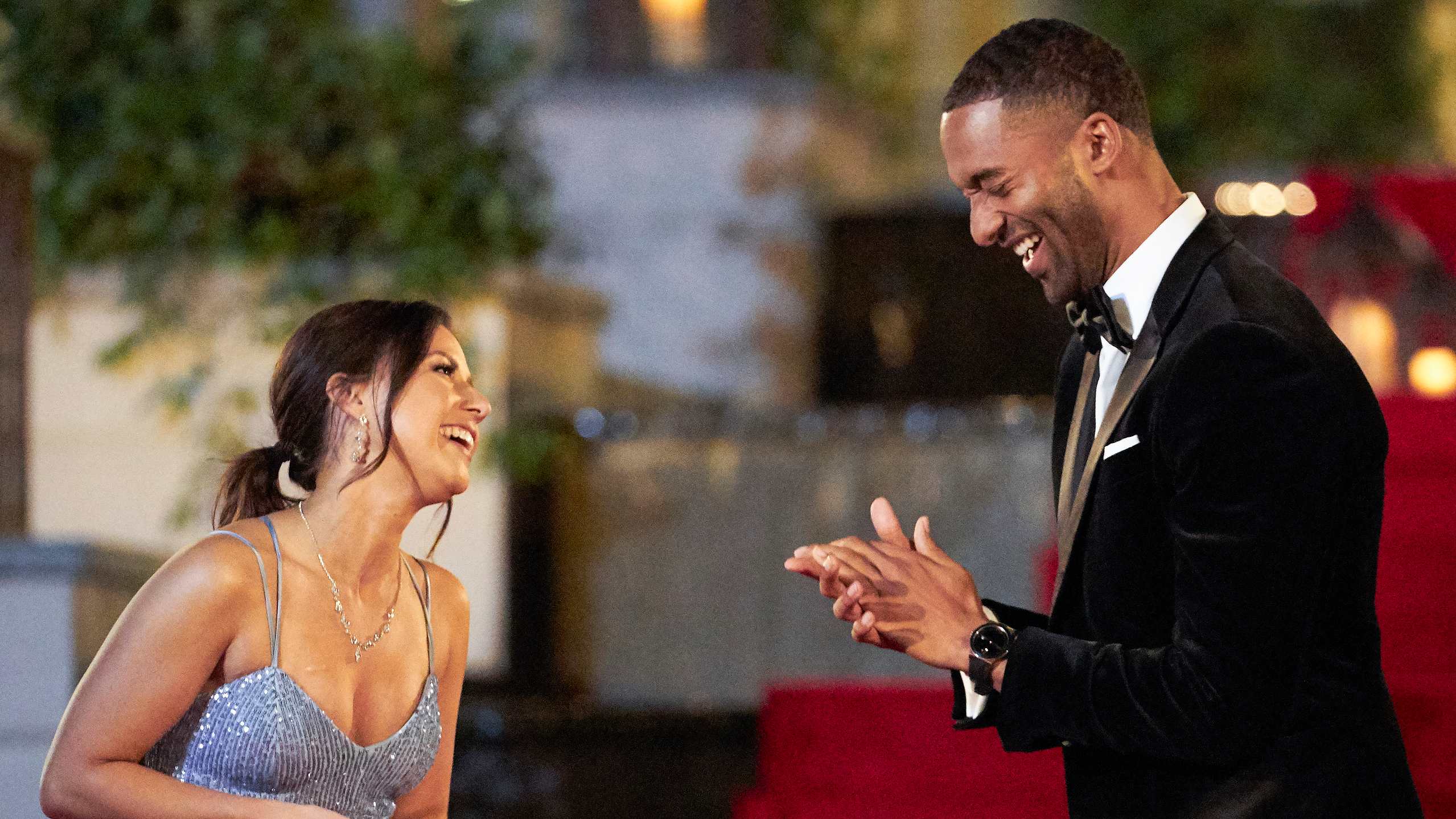
I don’t know who the bachelor is, I don’t know who Miss Etiquette is, but the series begins with Sweet Polly Purebread announcing to the bachelor, with her hand behind her back: “The pandemic was really hard on me, but I got through the tough times with this,” producing a dildo.

Where to begin? Howbout: Was? Is the pandemic over if you find true love? And what did you want him to do with that?Wouldn’t you have been concerned if, instead of laughing, he’d said, “Oh, thanks! Mine broke!”

Clearly, some shows need to be put into a medically-induced coma until the storm passes.

Bachelor' Premiere: Matt James on Being Distracted by a 'Big Dildo'  (Exclusive) | Entertainment Tonight
Miss Etiquette and The Bachelor

You have to feel for The Price is Right. Sure, Drew Carey looks like he’s about to mail bombs from a woodshed, but they’re trying. But it doesn’t feel the same without your second-cousin Terry shouting at you that you’re paying too much for sandwich bags.

The Price Is Right At Night's Drew Carey Talks COVID-19 Changes, Including  His New Beard - CINEMABLEND
Drew Carey

Some TV hosts seem utterly unfazed by a worldwide plague. Judge Judy may be better in a pandemic. She looks a lot like the New York city judge featured on 60 Minutes because of her straight talk to lawyers and laymen alike. And the show benefits without a courtroom to ooh and ahh at courtroom antics, which Judith Sheindlin always detested, anyway.

Judith Sheindlin and her bailiff, Petri Hawkins Byrd, in 1997, during the first season of ‘‘Judge Judy.’’
Judge Judy and Officer Byrd

Some shows are not only pandemic-proof; they’re people-proof. Battlebots may be a peek into an AI future. If anything, the show drags to a near-standstill when the humans cackle about what’s at stake in the pursuit of the show’s “Giant Nut” championship.

BattleBots crowns a new champion - Nerd Reactor
The Giant Nut

So what does that mean for viewing in ’21? At least on the news front, things are going to get pretty boring. Already, the 24/7s are replaying footage from the Capitol insurrection as if it were a viral YouTube cat video. As much as they bitch about inciting unrest, CNN and MSNBC needs to examine its insistence on highlighting lowlifes. Saul is entering its final season, and Fargo has no plans in place for a fifth season.

But COVID, which has proved to be a pandemic that teaches us what we can live without, has also improved some of the things we hold dear. Phone calls now really are a way to reach out and touch someone. Zoom has strengthened enumerable family relationships. Drive-ins are back. Dog shelters aren’t teeming with the abandoned and abused. Imagine what a hug is going to feel like again.

From surface to soul, COVID has been a human cleansing. If TV is a reflection of — or reaction to — that profound metamorphosis, it will see a new heyday. Just pass on the dildos.

Richard Ramirez: The Night Stalker - Crime Museum

Maybe it’s the sun, but California is a magnet for serial killers. The Zodiac Killer, The Hillside Strangler, The Manson Family; all called the Golden State home.

But non were as chilling as The Night Stalker.

The Night Stalker is one of the most terrifying serial killers in American history. Typically, psychopathic killers follow a pattern that can make them relatively predictable.

But Richard Ramirez, who would become dubbed the Night Stalker in the press, was a tornado of random violence. Murders, assaults, rapes, kidnappings—he terrorized the West Coast in 1984 and 1985, and was ultimately convicted of 13 counts of murder, 5 counts of attempted murder, 11 counts of sexual assault, and 14 counts of burglary, although those are probably only a fraction of his actual crimes.

His rampage became known around the world but, the new Netflix series Night Stalker: The Hunt for a Serial Killer re-frames the Ramirez story through the prism of those who chased and ran from him. And while Stalker can feel a bit like a Lifetime TV movie, it aptly documents a crime spree that would not only freeze the state; it transfixed a nation.

Stalker starts with a montage that sets the tone for Los Angeles in the 1980s, painting it as one of the most vibrant communities in the world, but possessing a criminal underbelly that emerged after dark.

The star of the docu=series is Detective Gil Carrillo, who was an inexperienced kid cop when he led the investigation into the Night Stalker crimes with legendary detective Frank Salerno, who broke the Hillside Strangler case and is an eloquent interview here. Their recollections of tips, leads and almost-hads give the film its police-procedural edge.

Too bad director Tiller Russell didn’t use their narrative to lead into an examination of the killer himself. Ramirez, who granted a handful of prison interview before his death from cancer in 2013, is given little attention in the film — just the final chapter in a four-piece series. It’s not enough, and the film would have been better served if Ramirez, a professed Satanist and fan of AC/DC, had been the center of at least the last two chapter.

It doesn’t completely derail Stalker, which has some binge-worthy moments, including the cliffhanger end of every episode.

Perhaps, though, this is the fitting film for the Ramirez case, which ended in a death sentence that was never carried out.

The movie feels similar: A relief that it wasn’t worse, but a shame it didn’t go farther.