The most anticipated documentary of the 21st century may be film’s most telling shrug.
You Can See Everything, directed by Nathan Fielder and Lance Oppenheim, was made in secret over nearly four years. It premiered without warning at the Telluride Film Festival on September 6, then played a single screening at the New York Film Festival. People reportedly lined up outside Lincoln Center before dawn. It opens Oct. 16.
The film follows Elizabeth Holmes during the 34 days before she reported to federal prison. In 2023, she invited a film crew into her Southern California home, where she lived with her partner, Billy Evans, and their children.
The story has already been told. Theranos claimed it could perform hundreds of medical tests from a few drops of blood. The technology failed. Holmes misled investors. A jury convicted her of fraud. She received an 11-year prison sentence.
The question now is not what Elizabeth Holmes did. The question is what happens when she meets Nathan Fielder.
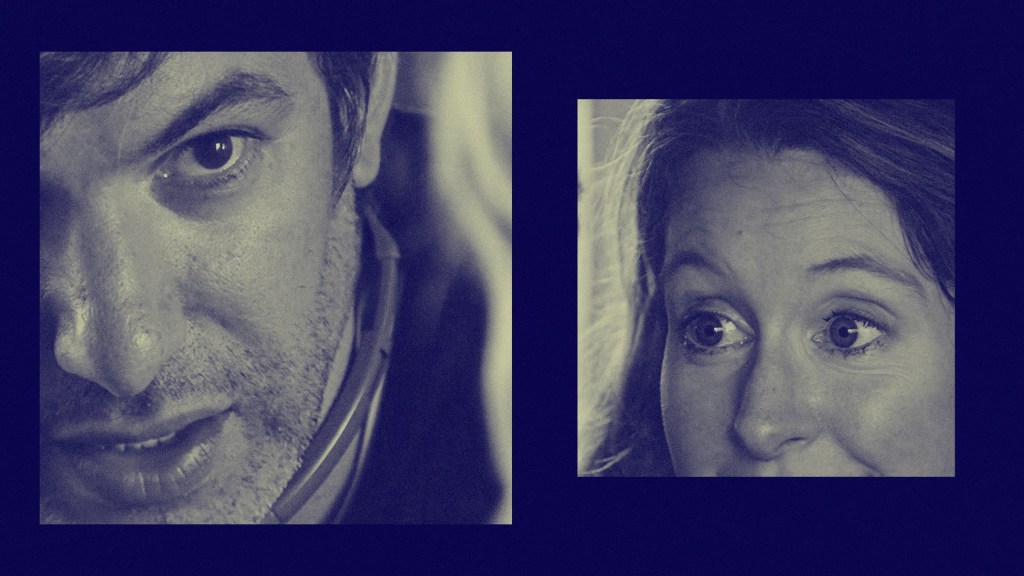
This is a clash between two professional manipulators.
Fielder has spent his career bending reality until people reveal themselves. Holmes spent hers bending reality until investors believed in a machine that did not work.
Fielder manipulates circumstances. Holmes manipulates belief. Put them in the same room and you have a documentary with a premise so strange that it sounds invented.
Fielder creates situations that look spontaneous but are carefully engineered. He adopts a flat, literal persona and lets people wander into their own absurdity. He offers them a stage, then watches what they do with it.
His comedy depends on control. He controls the premise. He controls the environment. He controls the edit. He understands that people often expose themselves when they believe they are managing the room.
Holmes operated differently. Her manipulation was not a comic experiment. It was a business model. She sold a vision of medical technology before the technology existed. She converted confidence into evidence. She made ambition sound like achievement. She wrapped failure in futurism and asked powerful people to suspend their disbelief.
Fielder manufactures unreality so that the truth can emerge. Holmes manufactured unreality so that the truth would stay hidden.
That is the collision at the heart of the film.
The access alone is astonishing. Holmes had spent seven years largely absent from the media. Then she invited Nathan Fielder into her home. He reportedly lived in the guesthouse and observed the family’s daily life. What began as an intimate portrait became a nearly three-hour investigation into Holmes’s personal mythology.
Holmes insists she has always been honest. She says she has never told a lie. That claim is more interesting than a confession would be.
A conventional liar knows the difference between fact and fiction. Holmes seems to occupy a more complicated territory. She appears to have built a private definition of truth in which intention matters more than performance and potential matters more than results.
The Theranos machine, she argues, was theoretically capable of performing more than 1,000 medical tests. The tests themselves simply had not been developed.
That distinction sounds absurd because it is absurd. A car capable of traveling 10,000 miles per hour remains imaginary if it has no engine capable of producing that speed. A medical machine capable of performing thousands of tests remains imaginary if it cannot perform them.
Yet Holmes appears to have lived inside the distinction.
This may be the film’s central question: Can a person deceive the world so completely that she eventually deceives herself? And will that world believe in her worldview?
The danger is that Holmes could manipulate the documentary into becoming another platform for her mythology. The opportunity is that Fielder may finally meet someone who cannot be directed, softened or neatly decoded.
One manipulator studies the other. Fielder turns awkwardness into entertainment. Holmes turned certainty into capital. Neither has much use for ordinary reality. And when they meet, the audience has to decide who is studying whom.
The most unsettling possibility is that both of them leave the room believing they won.

